Best newsletter platforms in 2026: the buyer's shortlist.
Compare eight newsletter platforms for SaaS, app, and plugin teams. See pricing, paid subscriptions, growth tools, and the fit for your audience.
Your product ships something new every few weeks. Most of the people who would care never hear about it, because the update lives in a changelog nobody opens.
A newsletter puts that story in the inbox on a schedule you control. It also builds an audience you own, which a social feed never quite does.
This 2026 shortlist covers the best newsletter platforms. Sequenzy takes the top spot for SaaS, app, and plugin teams whose newsletter should follow product and billing events.
Key Takeaways
The short version, before you compare the platforms.
A newsletter platform does more than send. The job is writing, sending, hosting an archive, and growing a list. For a SaaS company, it also decides whether an issue can follow a user's plan and product activity.
Sequenzy leads this shortlist for SaaS teams that email users, not only subscribers. Newsletters, lifecycle flows, and receipts share one list segmented by plan and billing events. Free includes 2,500 emails a month with unlimited contacts, and Pro starts at $19 per month for 15,000 emails.
Creator platforms differ in what they charge on revenue. Substack keeps 10% of paid subscription revenue. Kit charges 3.5% + 30c per sale including card processing. beehiiv, Ghost, and Buttondown take no platform cut, so only your payment processor's fees apply.
beehiiv and Loops cover the other two buying tracks. beehiiv Lite starts at $49 per month billed annually for 1,000 subscribers and adds automations, a referral program, and a 0% take rate on paid subscriptions. Loops prices by subscribed contacts, with Growth at $49 per month for 5,000 and transactional email included.
Free plans vary more than paid ones. Kit is free up to 10,000 subscribers. beehiiv is free up to 2,500. Loops sends to your first 1,000 contacts. MailerLite covers 250 subscribers, and Buttondown covers your first 100.
Newsletters are also a partner channel. The writers who already reach your buyers can promote your product to them. Affonso's Affiliate Finder searches for publishers by competitor, topic, or keyword, so a newsletter sponsorship can become a commission-based partnership.
What newsletter platforms actually are (and what they are not)
Newsletter platforms let you write an issue, send it to a subscriber list, and publish the same piece on a web archive. For a SaaS, app, or plugin company that usually means a founder letter, a monthly product update, or a content newsletter that brings readers back to the blog.
Most platforms now bundle more than sending. You get signup forms, a hosted website, segments, and analytics. Many add paid subscriptions, a recommendation network, referral rewards, an ad network, or a podcast feed. Those are separate buying decisions, even when a vendor packages them with the editor.
The other split is where subscriber data comes from. A publishing platform treats a reader as a subscriber who signed up on a form. A SaaS email platform treats the same person as a user, with a plan, a trial date, and billing events. The second model matters when a newsletter should only reach paying customers, or when an issue should mention the feature a reader has not tried yet. If you plan to pay newsletter writers a share of the revenue they send you, the free affiliate commission calculator is a useful check before you agree terms.
A newsletter platform does not replace your product analytics, CRM, or billing provider. You still need something worth reading, a sending rhythm you can keep, and an owner for the list. The software sends the issue and measures what readers do with it.
How We Ranked These Newsletter Platforms
This shortlist evaluates newsletter platforms for existing SaaS, app, and plugin companies. Cold outreach tools and pure transactional email APIs are out of scope.
The research uses public pricing, product pages, and vendor documentation.
We compared five criteria:
Publishing and website. The editor, a hosted archive or website, custom domains, multiple newsletters, and how much branding you can remove.
Audience growth. Signup forms, referral programs, recommendation networks, and the discovery a platform brings beyond your own traffic.
Monetization. Paid subscriptions, ad networks, sponsorships, and the platform's cut of the revenue, stated separately from payment-processor fees.
Product and developer fit. APIs, webhooks, MCP access, and native connections to billing, auth, or product events. This decides whether a newsletter can follow a user's plan and behaviour.
Total cost and plan capacity. Software fees, the billing unit (subscribers, contacts, members, or emails sent), free-plan limits, and what the entry plan actually includes.
Customer results are attributed to the company reporting them. Entry plans and higher tiers are compared with their billing terms and usage limits stated separately. A free plan counts as real capacity only when it includes a published subscriber or sending allowance. We plan to review this guide quarterly and after material pricing changes.
The Best Newsletter Platforms in 2026
A newsletter starts as an editor and a list. The platforms below differ in how they help that list grow, how they handle paid readers, and how closely they connect to your product data. These eight options cover all-in-one publishing platforms, creator email tools, SaaS lifecycle platforms, and lean newsletter software.
1. Sequenzy, best for SaaS newsletters driven by product and billing events
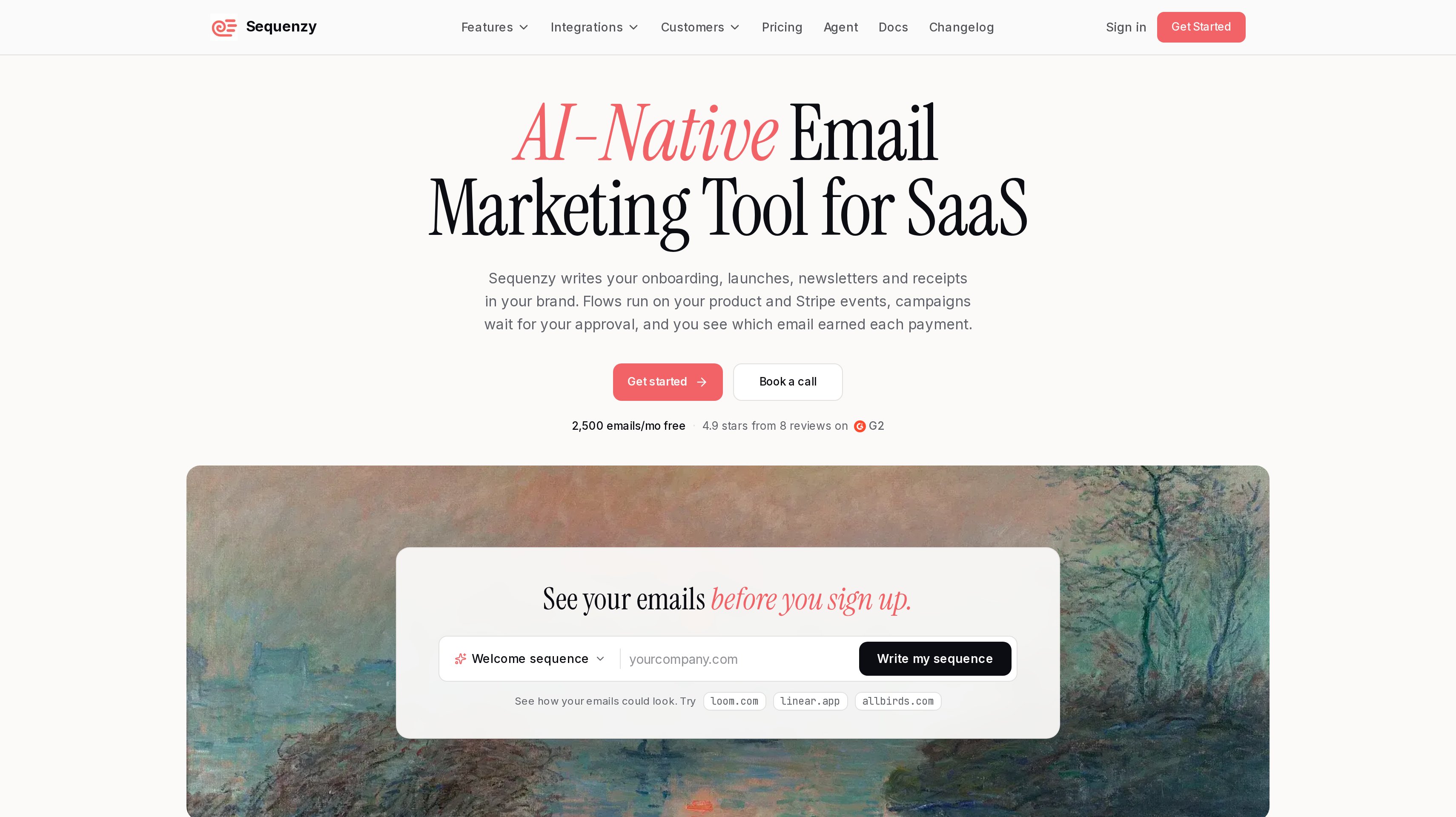
Sequenzy is an AI-native email platform for SaaS. It writes onboarding emails, launches, newsletters, and receipts in your brand. Flows run on product and Stripe events, and campaigns wait for your approval. A SaaS newsletter goes to users with a plan, a trial date, and a billing history, so an issue can reach paying customers only, and revenue attribution shows which email earned each payment. That link between the newsletter and the product is why it leads this shortlist.
Pricing follows emails sent, not contacts. Free includes 2,500 emails a month, unlimited contacts, and a small Sequenzy footer. Pro starts at $19 per month, or $205 a year, for 15,000 emails a month, and $29 per month for 30,000. Every plan includes unlimited contacts, sending domains, team members, push and in-app messages, segments, A/B tests, and API, MCP, and CLI access. SMS and MMS are a $16 per month add-on with 1,000 credits. A done-for-you setup service is listed at a $499 per month founding price.
Native integrations cover Stripe, Paddle, Lemon Squeezy, Polar, Creem, and Dodo for billing, plus PostHog, Better Auth, Clerk, Supabase, Zapier, and n8n.
The Sequenzy integration connects your Affonso affiliate program to Sequenzy. Affiliates sync in as subscribers with their referral code, status, coupon code, and lifetime totals for referred revenue, commissions, and payouts. Affonso's referral, commission, coupon, and payout events then trigger automations, such as a welcome email with the partner's referral code or a confirmation when a payout is paid, and Sequenzy includes the integration at no extra cost.
Best suited for SaaS teams that want newsletters, lifecycle flows, and transactional email to share one list segmented by plan and billing events. Pricing by emails sent matters when the user base is large but the sending rhythm is light.
2. beehiiv, best for an all-in-one newsletter with growth tools
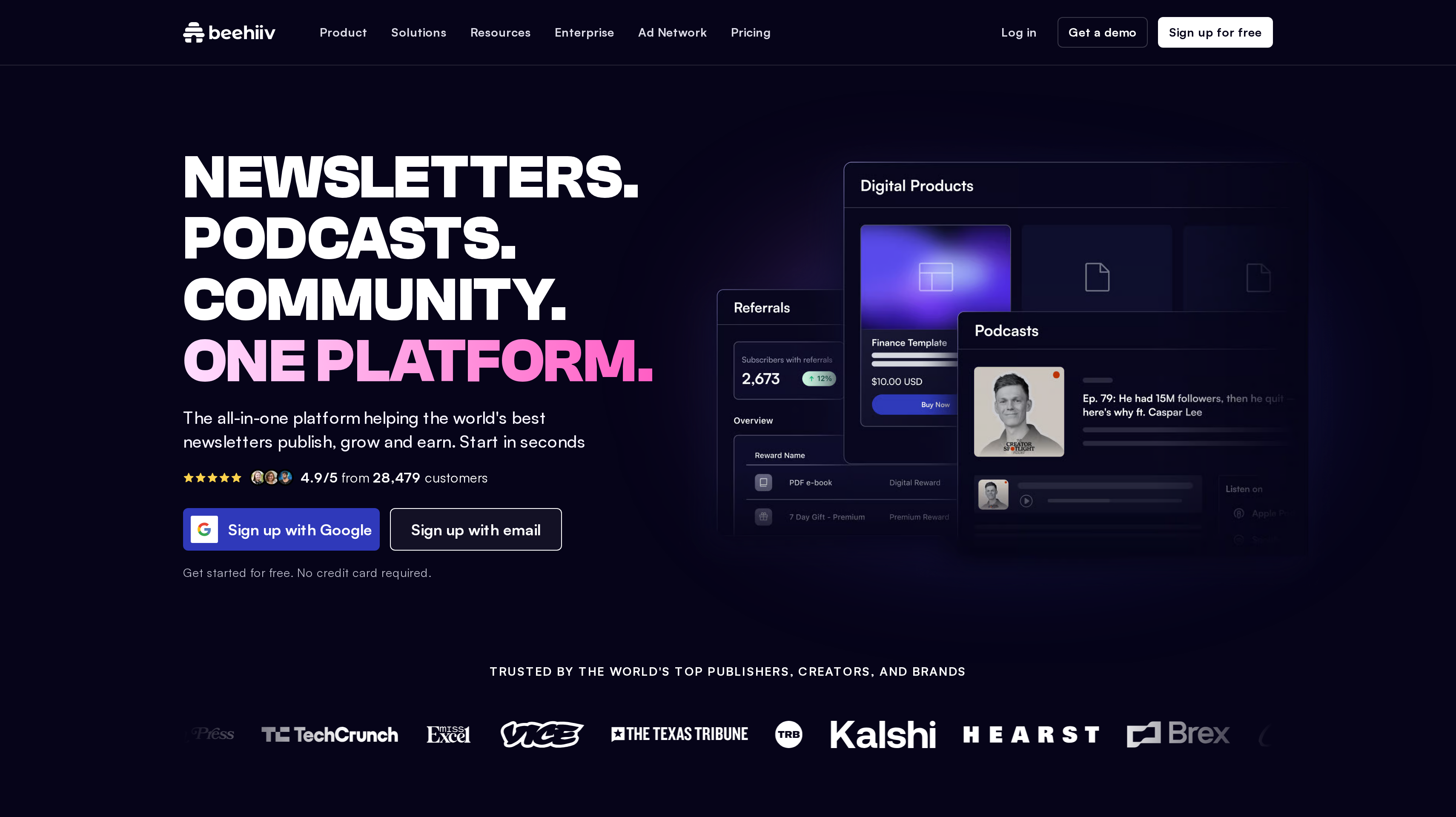
beehiiv puts newsletters, a website, podcasts, and a community in one account. The editor, website builder, subscribe forms, and analytics ship on every plan, including Free. That breadth makes it the strongest all-in-one publishing platform here. A SaaS team can launch a branded newsletter and its archive site in one place, then switch on referral rewards, recommendations, and automations as the list grows.
Free covers up to 2,500 subscribers with unlimited email sends, a recommendation network, API access excluding the Send API, and read access for the beehiiv MCP server. Lite starts at $49 per month billed annually, or $59 monthly, for up to 1,000 subscribers. It adds email automations, surveys and polls, webhooks, two team seats, MCP write access, a referral program, and paid subscriptions with a 0% take rate. Pro starts at $95 per month billed annually, or $109 monthly. It adds up to 10 publications, 10 seats, the Send API, dynamic content, click-triggered automations, RSS to send, and removal of beehiiv branding. Enterprise is quoted and adds SSO, audit logs, and dedicated IPs.
beehiiv states that it takes 0% of paid subscription revenue, so Stripe's standard 2.9% + $0.30 per transaction is the only processing cost on paid tiers. The Ad Network and paid recommendations sit on Lite and above.
Best suited for SaaS and app teams that want one platform for the newsletter, its website, and list growth from referrals and recommendations. Lite is the step for automations and webhooks, and Pro is the step for multiple publications and the Send API.
3. Kit, best for founder newsletters with automations
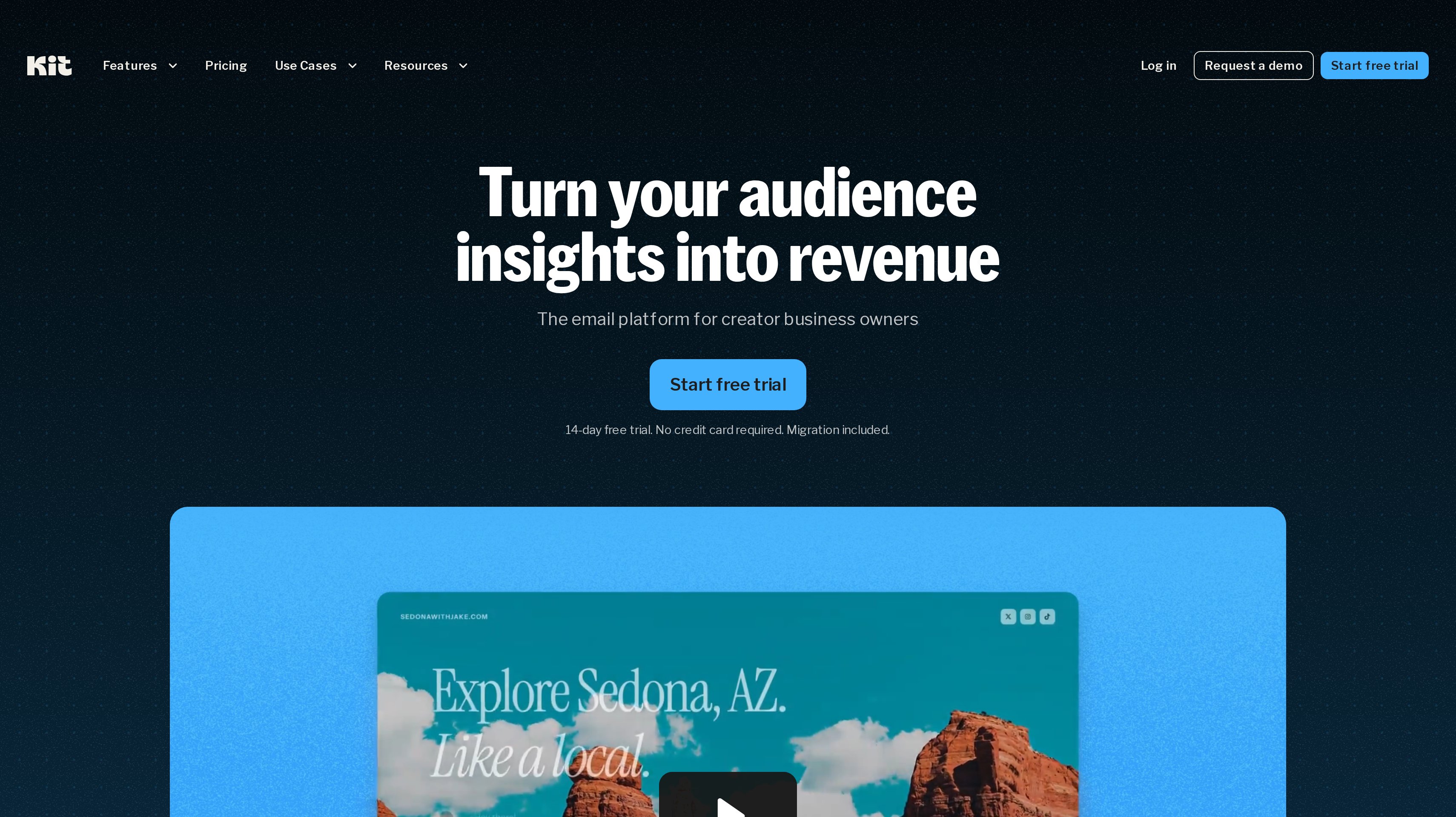
Kit, formerly ConvertKit, is an email platform built for creator businesses. Kit says more than 550,000 creator business owners use it. For a SaaS founder who writes in public, that creator model fits well. Broadcasts, sequences, landing pages, forms, and digital product sales all live in one account.
Free covers up to 10,000 subscribers with unlimited landing pages, forms, and broadcasts, plus tagging, segmentation, and digital product and subscription sales. Creator is $39 per month on monthly billing, or $33 per month billed yearly at $390, for 1,000 subscribers. It adds unlimited visual automations and sequences, Kit MCP, subject-line A/B tests, RSS campaigns, apps and integrations, and removal of Kit branding. It also includes two users. Pro is $79 per month on monthly billing for 1,000 subscribers, with a yearly rate of $66 per month. It adds unlimited users, engagement scoring, deliverability reporting, collaborative editing, and a newsletter referral system through a free SparkLoop plan.
Paid newsletters, recurring subscriptions, and tip jars carry a 3.5% + 30c transaction fee that includes card processing. Kit's Paid Recommendations network keeps 23.5% of earnings paid through it. Paid plans have a 14-day trial without a credit card, and Kit offers free migration from another platform.
Best suited for founders and small teams that write a personal newsletter and want automations, landing pages, and creator monetization behind it. A large free list allowance matters when the newsletter is still growing.
4. Ghost, best for an owned publication with paid memberships
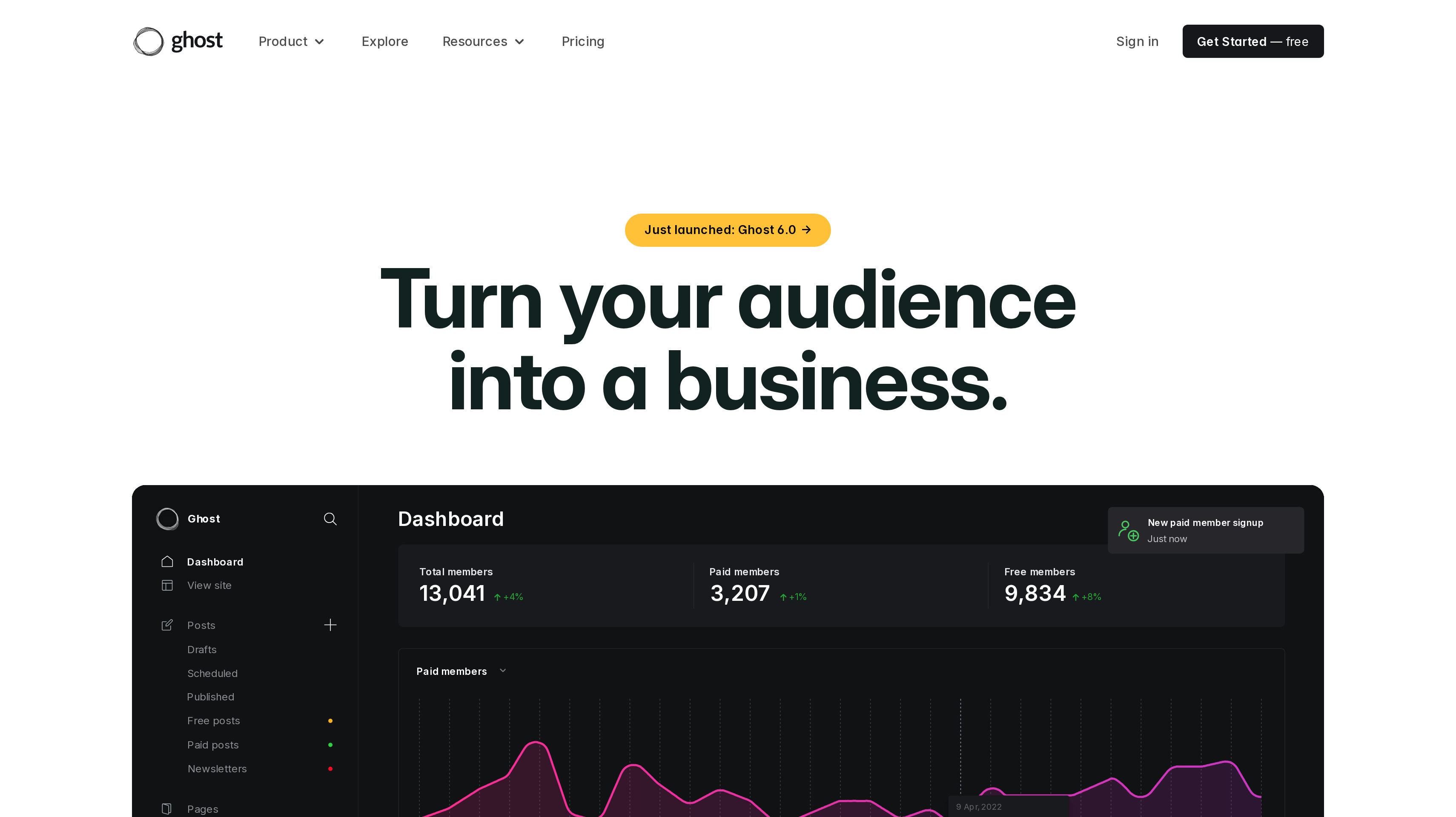
Ghost is an open-source publishing platform for a website, newsletters, and paid memberships. Ghost(Pro) is the official managed hosting. You write once, publish on the web, and deliver the same post by email. Members can sign up for free or buy a paid subscription across monthly and yearly tiers.
Starter is $15 per month billed yearly, or $18 monthly, for 1,000 members, one staff user, one newsletter, and a free custom domain. Publisher is $29 per month billed yearly, or $35 monthly. It adds paid subscriptions, three premium tiers, three newsletters, three staff users, custom themes, a custom sending domain, webhooks, the Admin API, and Zapier and n8n automation. Business is $199 per month billed yearly, or $239 monthly, with 10,000 members, 15 staff users, and 10 newsletters. Custom adds SSO, a dedicated IP, and a 99.9% uptime SLA. Email sends are unlimited on every plan.
Ghost charges 0% transaction fees on paid subscriptions, so only Stripe's processing applies. Publications join the Ghost Explore directory, can recommend each other, and can distribute posts to the social web through ActivityPub. Ghost says publications on the platform earn more than $100,000,000 a year.
Best suited for teams that want the newsletter and the content site to be one owned publication with paid tiers. Custom themes, webhooks, and the Admin API on Publisher matter when the publication sits next to your marketing site.
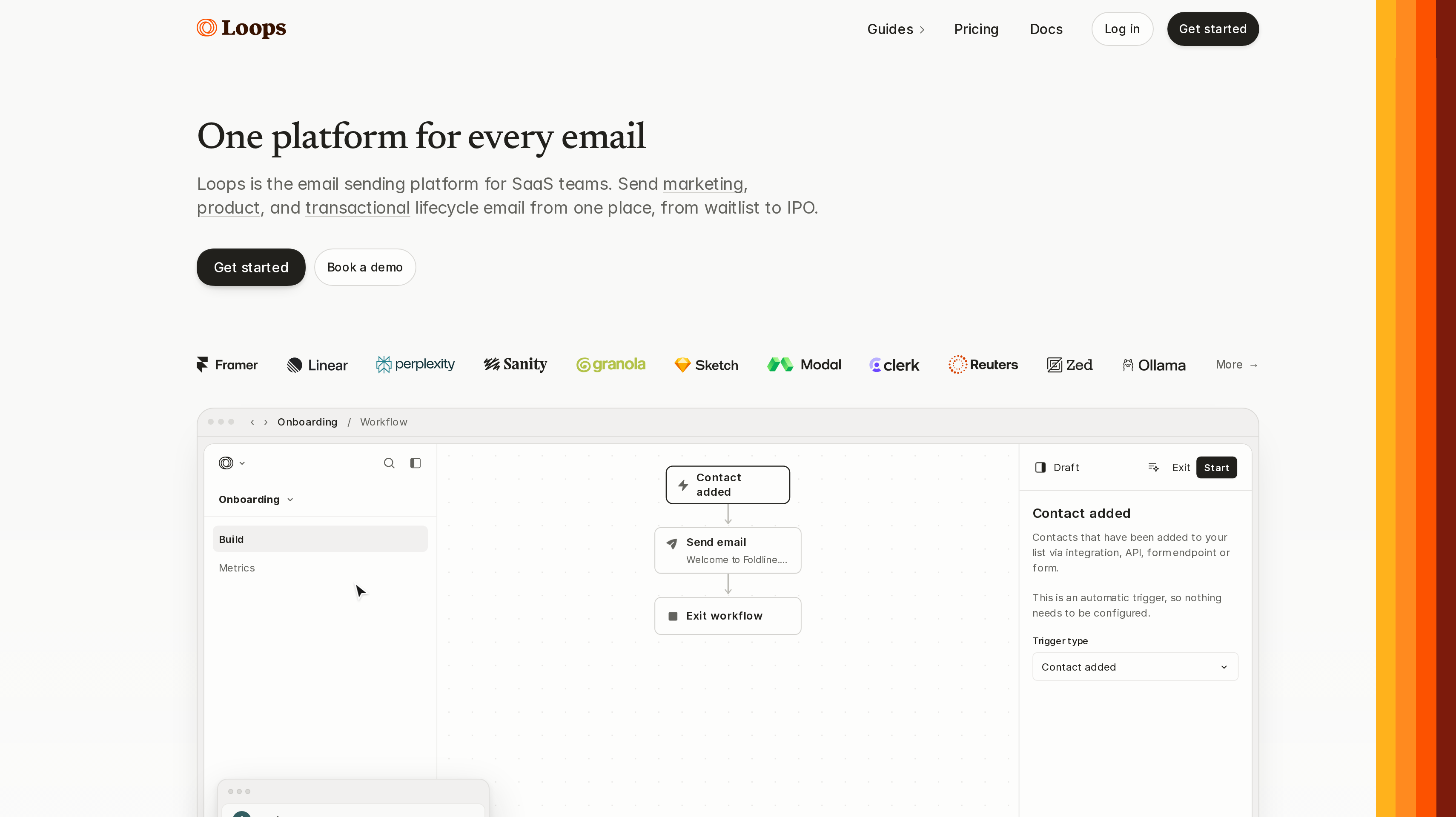
5. Loops, best for product updates next to transactional email
Loops is an email platform for SaaS teams. Marketing campaigns, lifecycle workflows, and transactional email live in one product. A product-update newsletter goes out as a campaign to a saved segment, such as active customers. Signups, upgrades, and cancellations trigger workflows from the same contact record.
Pricing follows subscribed contacts. Free stores unlimited contacts and includes 4,000 marketing and transactional sends per rolling 30 days to your first 1,000 contacts, with a Loops footer. Growth is $49 per month for up to 5,000 subscribed contacts, with unlimited marketing and transactional sends and no Loops branding. Larger lists scale up to 1.5 million contacts before Enterprise. Unsubscribed contacts never count toward the price, and Loops does not charge for team seats.
Paid accounts can send up to 1,000 emails per second. Themes and components carry your brand across every campaign. Connections listed on the homepage include Stripe billing events, Supabase user sync, and Clerk auth sync. A public API creates contacts and sends transactional email, and Loops supports setup through AI agents. Hard bounces and spam complaints are suppressed automatically.
Best suited for SaaS teams that want the product newsletter, onboarding workflows, and receipts to run from one contact list without seat fees. Contact-based pricing works well when you email the same users often.
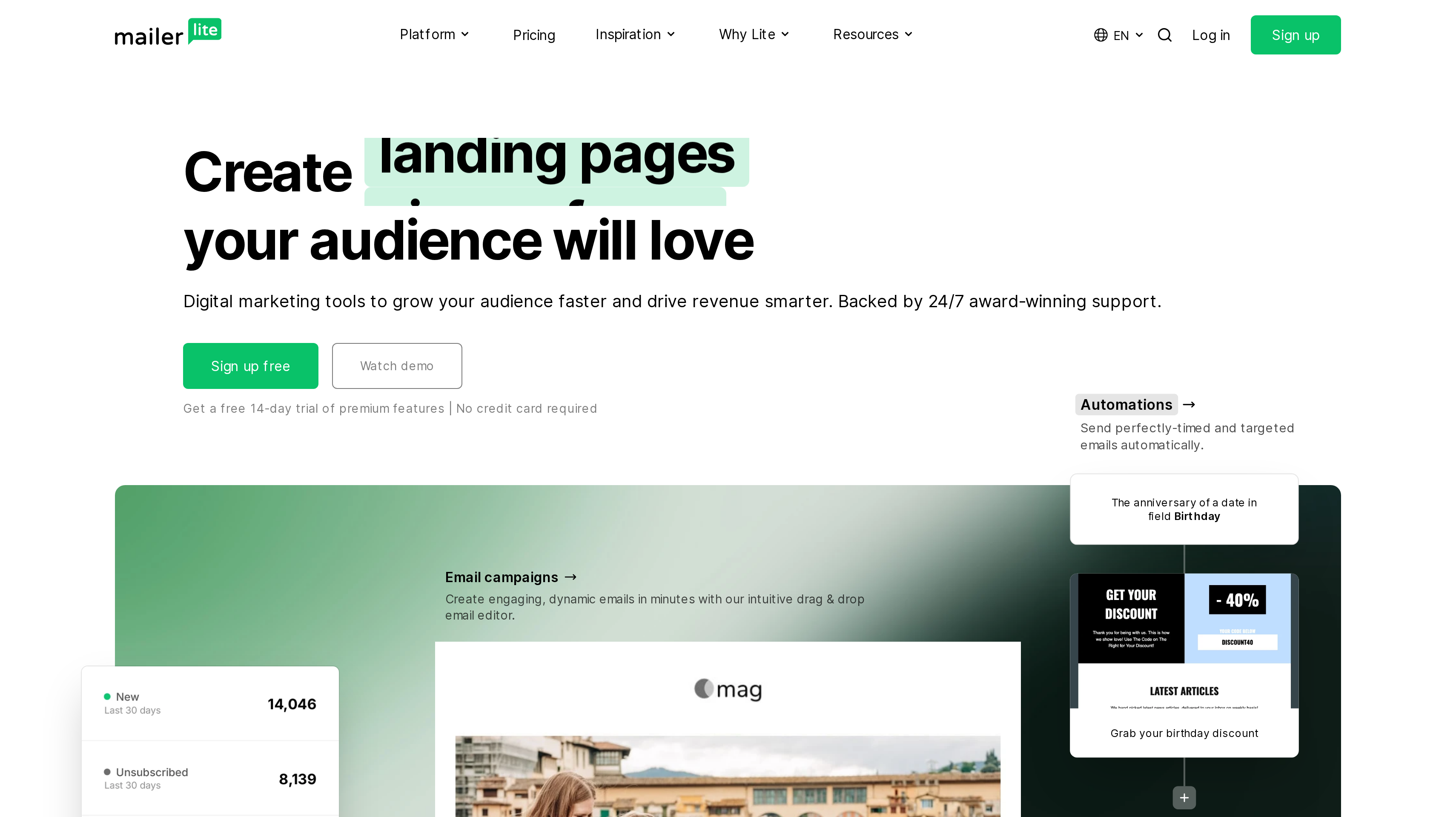
6. MailerLite, best for low-cost newsletters with landing pages
MailerLite combines newsletter sending with automations, landing pages, websites, a blog section, and signup forms. MailerLite says more than 1 million creators and businesses use it. The drag-and-drop, custom HTML, and simple editors ship on every plan. That makes it a practical choice when one person runs the newsletter and the signup pages around it.
Free covers up to 250 subscribers, 2,500 monthly emails, two user seats, one website, one landing page, and three automations. Comfort starts at $12 per month and adds unlimited templates, dynamic content, auto-resend, multivariate testing, a preference center, and the AI writing assistant. It includes three seats, 50 automations, and 10 sites. Power starts at $25 per month and adds unlimited monthly emails, seats, automations, forms, and digital products, plus 24/7 live chat. Enterprise covers more than 200,000 subscribers.
Paid newsletters, recurring subscriptions, digital products, and bookings are built in. Stripe, Shopify, and WooCommerce integrations connect sales data. The MCP server lets Claude or ChatGPT manage campaigns, with sending through the API and MCP reserved for paid plans. MailerLite stores data in the European Union and offers nonprofits 30% off paid plans. Every new account gets a 14-day trial of premium features.
Best suited for small marketing teams that want a newsletter, landing pages, and automations at a low entry price. EU data storage matters when your subscriber base sits mostly in Europe.
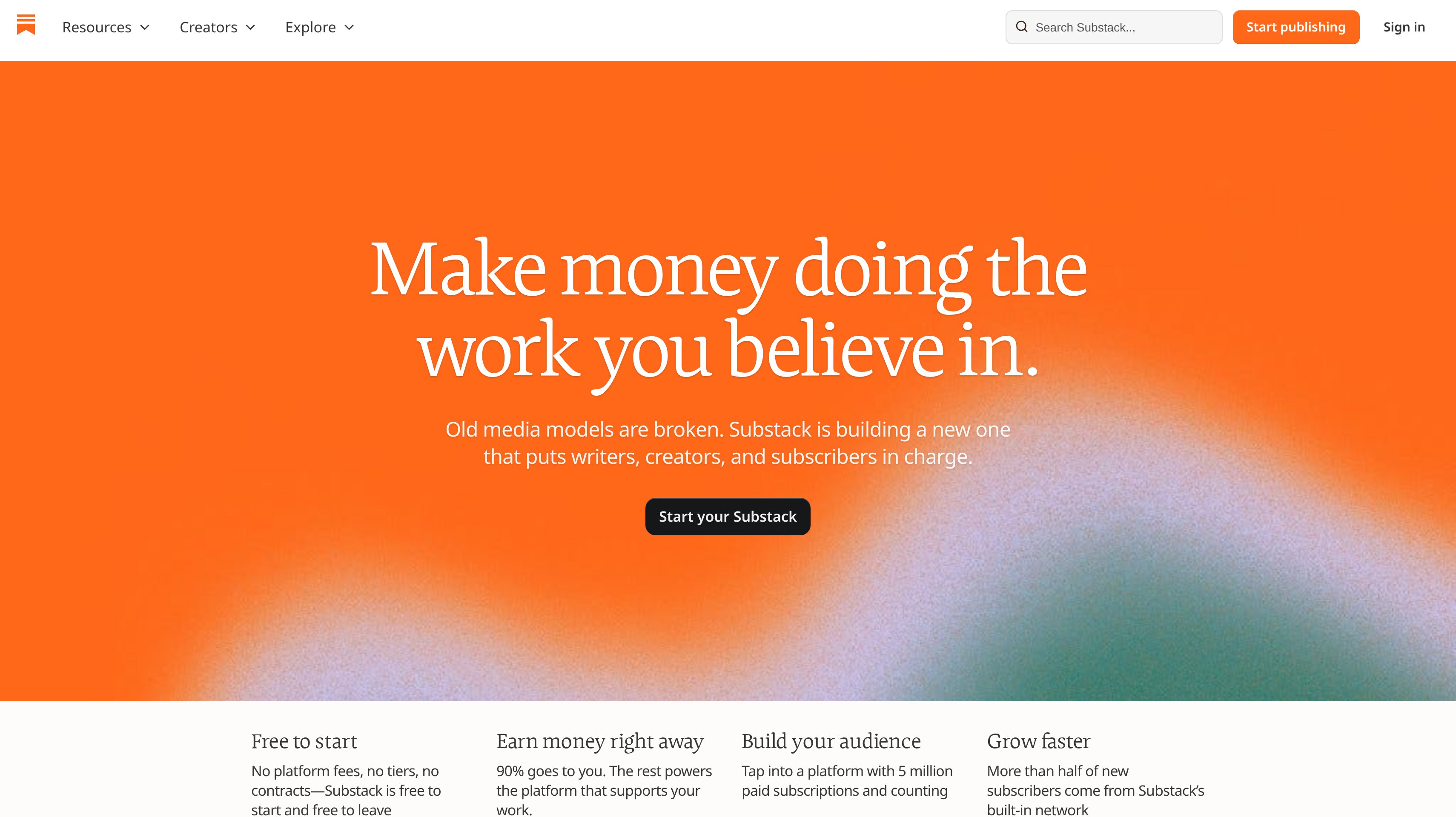
7. Substack, best for network-driven discovery
Substack is a publishing platform and reader network. You can publish newsletters, podcasts, and video, and go live with subscribers. Substack handles payments, distribution, and subscriber management. Media companies can run several writers, sections, and podcasts in one publication.
There are no tiers, contracts, or platform fees to start. When readers pay, writers keep 90% of subscription revenue minus credit card fees. Substack keeps the rest. That turns the cost into a share of revenue rather than a monthly bill, which matters if a SaaS company runs a free newsletter and never charges readers.
Discovery is the reason to choose it. Substack says more than half of new subscribers come from its built-in network, and that over 30% of paid subscriptions come from within that network. Recommendations, Notes, and collaborations put a publication in front of readers who already use the app. Podcasts publish to Apple, Spotify, and YouTube from the same account. Substack Defender offers publishers legal support, including pre-publication review.
Best suited for founders and operators who write under their own name and want readers from an existing network rather than only their own traffic. A free start and a share of paid revenue fit a newsletter that may stay free.
8. Buttondown, best for a lean newsletter with a full API
Buttondown is independent newsletter software with a rich text or Markdown editor, hosted archives, and sending from a custom domain. It has been profitable and self-funded since it was founded in 2017. Its API, which Buttondown describes as feature-complete, lets developers build their own tools, and cross-posting sends work from other platforms to your list.
It costs nothing for your first 100 subscribers. Basic is $9 per month, or $90 a year, for up to 1,000 subscribers. Standard is $29 per month for up to 5,000, Professional is $79 for up to 10,000, and Advanced is $139 for up to 20,000. Buttondown charges for active subscribers only. Prices assume at most one email a day to the full list.
Features beyond the core are add-ons. Tagging and segmentation, paid subscriptions, analytics, comments and surveys, RSS-to-email, and attachments are $9 per month each. Sponsorships, archives on a custom domain, multiple newsletters, and automations are $29 per month each. Whitelabeling and Teams are $79 per month each. Buttondown takes no fees from paid subscribers, offers registered nonprofits 50% off, and migrates a whole list within one business day.
Best suited for technical founders who want a clean, Markdown-friendly newsletter with an API and pay only for the features they switch on. Add-on pricing matters when the newsletter only needs a few capabilities.
Side-by-Side Comparison
The comparison covers publishing, audience growth, paid subscriptions, product and developer fit, and what the entry plan includes. Prices are USD list prices as each vendor publishes them, with billing terms shown.
Lite from $49/mo billed annually or $59 monthly, 1,000 subscribers. Pro from $95/mo billed annually
Up to 2,500 subscribers, unlimited sends
Lite and above; 0% take rate
Referral program, recommendation network, Ad Network
API, webhooks on Lite, Send API on Pro, MCP
Kit
Creator $39/mo or $33/mo billed yearly, 1,000 subscribers. Pro $79/mo
Up to 10,000 subscribers
3.5% + 30c per sale including processing
Recommendations, SparkLoop referrals on Pro
API, 100+ apps, Kit MCP
Ghost
Starter $15/mo billed yearly, 1,000 members. Publisher $29; Business $199
14-day trial
Publisher and above; 0% transaction fees
Explore directory, recommendations, ActivityPub
Content API, Admin API and webhooks on Publisher; open source
Loops
Growth $49/mo for 5,000 subscribed contacts
1,000 contacts, 4,000 sends per 30 days
Lifecycle and transactional focus
Saved segments, lifecycle workflows
Stripe, Supabase, Clerk; public API; transactional email
MailerLite
Comfort from $12/mo. Power from $25/mo
250 subscribers, 2,500 emails/mo
Paid newsletters and recurring subscriptions
Forms, pop-ups, landing pages, websites
API, webhooks, MCP; Stripe, Shopify, WooCommerce
Substack
No subscription fee
Free to start
Writers keep 90% minus card fees
Built-in reader network, recommendations, Notes
Hosted platform
Buttondown
Basic $9/mo or $90/yr, 1,000 subscribers. Standard $29
First 100 subscribers
$9/mo add-on; no fees from paid subscribers
Sponsorships add-on, RSS-to-email
Full API, Markdown, cross-posting
Which newsletter platform fits your use case
Two SaaS companies can sell the same kind of product and need different newsletter software. Start with the job the newsletter has to do. These rows map that job to the tools above.
Use case
What changes about the setup
What to look for
Shortlist pick
Product updates for users and customers
Issues should reach paying customers, trial users, or one plan only.
Billing integrations, event-based segments, transactional email in the same tool.
Sequenzy or Loops
Content newsletter that grows on its own
The list should grow from readers, not only from signups in your app.
Referral rewards, a recommendation network, a hosted website.
beehiiv
Founder letter with automations
A personal newsletter feeds welcome sequences, launches, and offers.
Visual automations, landing pages, a large free list.
Kit
Owned publication and blog
The newsletter and the content site should be one property on your domain.
Website themes, member tiers, open source, 0% payment fees.
Ghost
Low-cost newsletter with signup pages
One person runs the newsletter, the forms, and the landing pages.
Low entry price, page builder, automations.
MailerLite
Reach readers beyond your own traffic
The audience you want already reads in a network app.
Built-in discovery, recommendations, a revenue share instead of a fee.
Substack
Lean newsletter with an API
Developers want Markdown, a clean archive, and scripting.
Full API, add-on pricing, custom domain sending.
Buttondown
Proof: What results look like
Sequenzy publishes case studies from SaaS customers. InstantInterior AI went from no email marketing to nearly $600 in additional revenue in its first month. PressPulse lets AI agents run its newsletter and reports saving $45 a month and eight hours a month.
Ghost says publications on its platform earn more than $100,000,000 a year with 0% payment fees. Its showcase lists Tangle at $281K MRR and Creator Science at $39K MRR. Those are vendor-published figures for paid publications, not for a free product newsletter. Substack reports that more than 30% of paid subscriptions on its platform come from its own network.
A newsletter audience also becomes a source of partners and referrals. Jonathan Wilke, founder of supastarter, reports that affiliates refer more than 50% of its customers. See more customer stories, then use the LTV:CAC analyzer to judge what owned and partner channels do to acquisition cost.
FAQ
What is the best newsletter platform for SaaS companies?
Sequenzy ranks first in this shortlist for SaaS, app, and plugin teams whose newsletter should segment by plan and follow product and billing events. beehiiv is the closer fit when you want a newsletter, a website, and referral-driven growth in one account. Ghost is the closer fit when the newsletter and the blog should be one owned publication.
How much do newsletter platforms cost?
Sequenzy starts at $19 per month. beehiiv Lite starts at $49 per month billed annually. Kit Creator is $39 per month, or $33 billed yearly. Ghost Starter is $15 per month billed yearly. Loops Growth is $49 per month, MailerLite Comfort starts at $12 per month, and Buttondown Basic is $9 per month. Substack has no subscription fee and keeps 10% of paid revenue.
Which newsletter platforms take a cut of paid subscriptions?
Substack keeps 10% of paid subscription revenue, plus card fees. Kit charges 3.5% + 30c per sale, including card processing. beehiiv, Ghost, and Buttondown state that they take no platform fee on paid subscriptions, so only your payment processor's fees apply.
What is the difference between newsletter software and email marketing software?
Newsletter software is built around publishing: an editor, an archive, a website, and audience growth. Email marketing software for SaaS is built around user data: lifecycle flows, segments by plan, and transactional email. Many products now cover both, so start from the job the email has to do.
Can I send product updates and transactional email from one newsletter platform?
Yes, with the SaaS-focused tools. Sequenzy and Loops both include transactional email, product-triggered flows, and campaigns in one account. beehiiv offers a Send API on Pro. Ghost, Substack, and Kit focus on publishing and creator email.
How should I compare subscriber, contact, and email-volume pricing?
Use the vendor's published unit. beehiiv, Kit, MailerLite, and Buttondown price by subscribers. Ghost prices by members. Loops prices by subscribed contacts. Sequenzy prices by emails sent each month, with unlimited contacts. A large list that you email rarely costs less on volume pricing. A small list you email often costs less on subscriber pricing.
How do I add an affiliate or referral program to my newsletter business?
Readers who share a newsletter and writers who recommend a product both behave like partners. Run commissions, referral links, and payouts in affiliate software for SaaS, then use the Sequenzy integration or your newsletter's automations to email partners about their referrals. The affiliate software shortlist covers that buying decision.
How do I migrate my list to a new newsletter platform?
Export subscribers with their consent status, tags, and paid status, then confirm how the new platform imports paid subscribers and archives before you switch. Kit offers free migration, and Buttondown migrates a list within one business day. Send a test issue to a small segment before you move the full list.
Try for free
Pick the newsletter platform that matches how you already reach users. Start with a monthly product update or a founder letter. Put the signup form on your blog and inside your app. Measure replies and clicks before you add paid tiers or sponsorships. When readers and writers start recommending your product, give them a partner program that tracks it. Start your Affonso free trial.
 Affonso
 Silvestro Zinnanti, FounderComparisonOctober 19, 202621 min read