Best merchant of record in 2026: the buyer's shortlist.
Compare eight merchant of record providers for SaaS. See billing models, transaction fees, Stripe Managed Payments eligibility, and the fit for your team.
Your first international subscription can bring more work than the payment itself. Someone needs to handle sales tax, issue the receipt, and answer the customer when the charge looks unfamiliar.
A merchant of record takes responsibility for selling the product to your customer. Your team still builds and supports the software, but the provider handles the payment and the tax obligations covered by its service.
This shortlist compares the best merchant of record options for SaaS founders in 2026. Polar leads for combining subscriptions, credits, and metered usage with a merchant of record service. Paddle is a strong alternative for all-in-one SaaS billing and buyer support, with other picks for lower base fees, an existing Stripe setup, and sales-assisted software deals.
Key Takeaways
The short version, before you compare the tools.
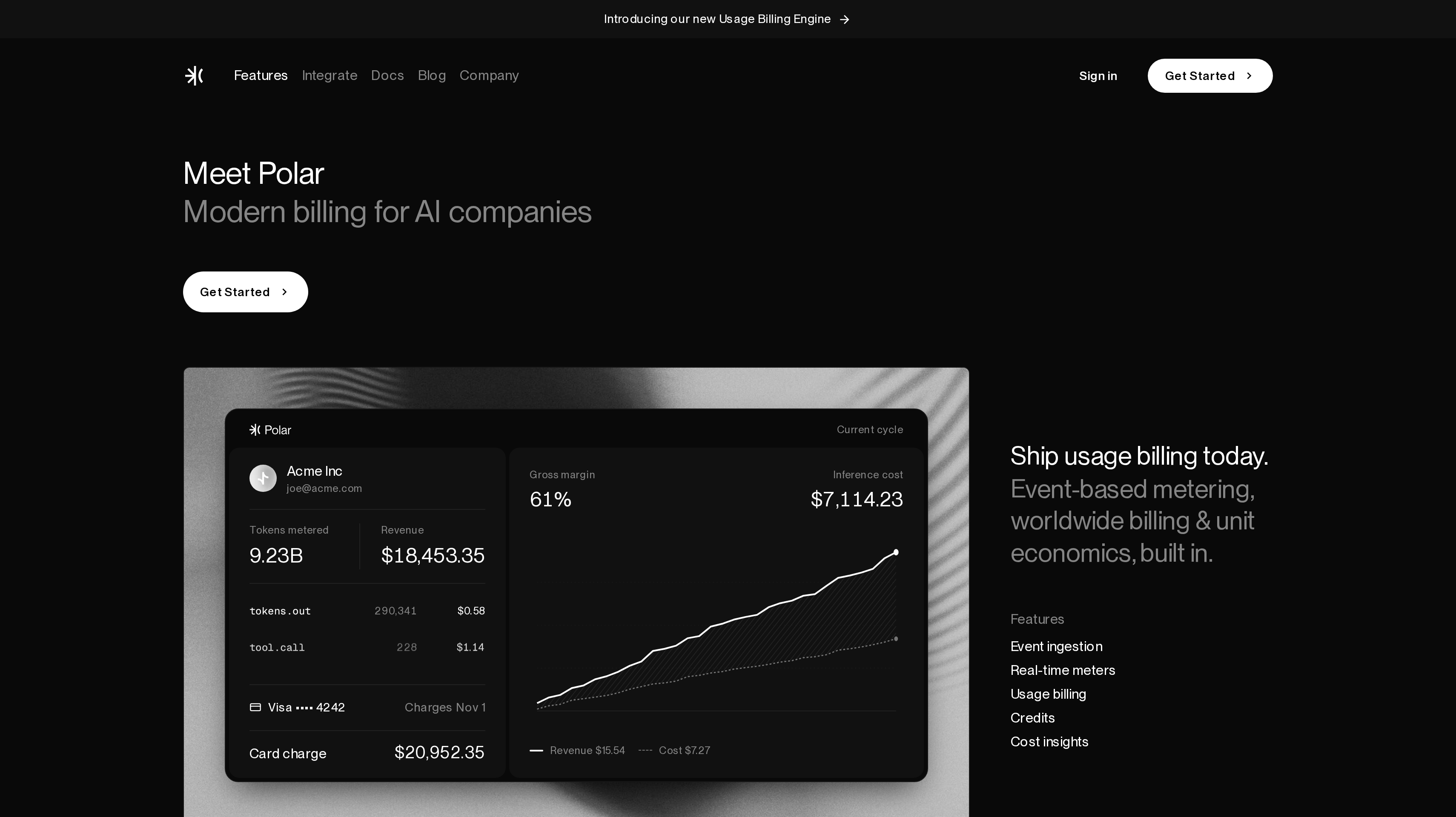
Polar is our top pick for SaaS billing flexibility. Subscriptions, prepaid credits, and metered usage let a product charge a fixed price or bill for consumption. Its merchant of record service handles the sale and tax work. Starter charges 5% + $0.50 per transaction, while paid plans trade a monthly fee for lower transaction rates.
Paddle is a strong all-in-one alternative. Checkout, subscriptions, tax compliance, fraud protection, and billing support sit in one service. Its published pay-as-you-go rate is 5% + $0.50 per checkout transaction.
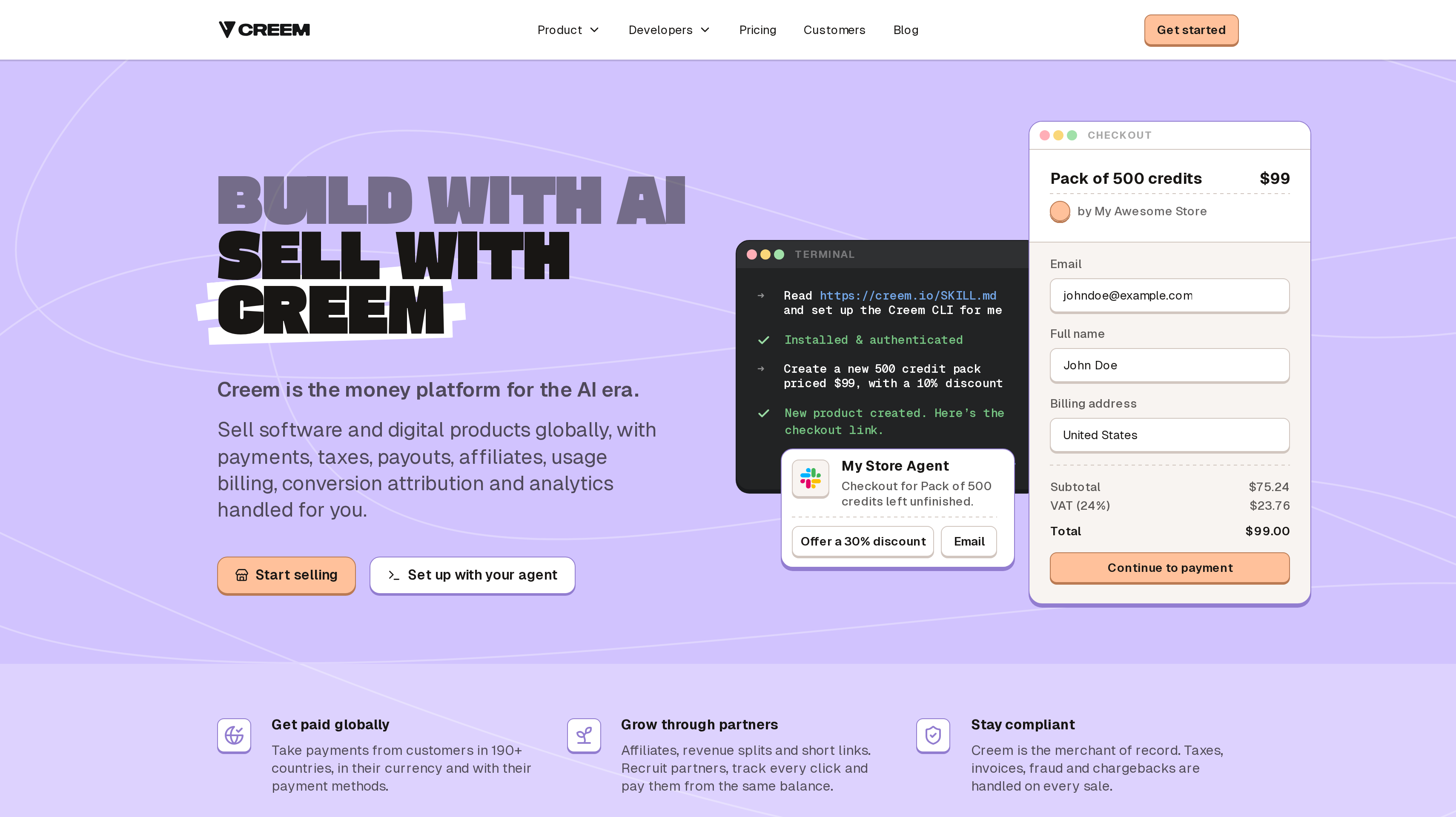
Creem and Dodo Payments deserve an early look. Creem publishes 3.9% + $0.40 per successful transaction without a monthly fee. Dodo starts at 4% + $0.40 for domestic US cards and wallets, with separate subscription and international charges.
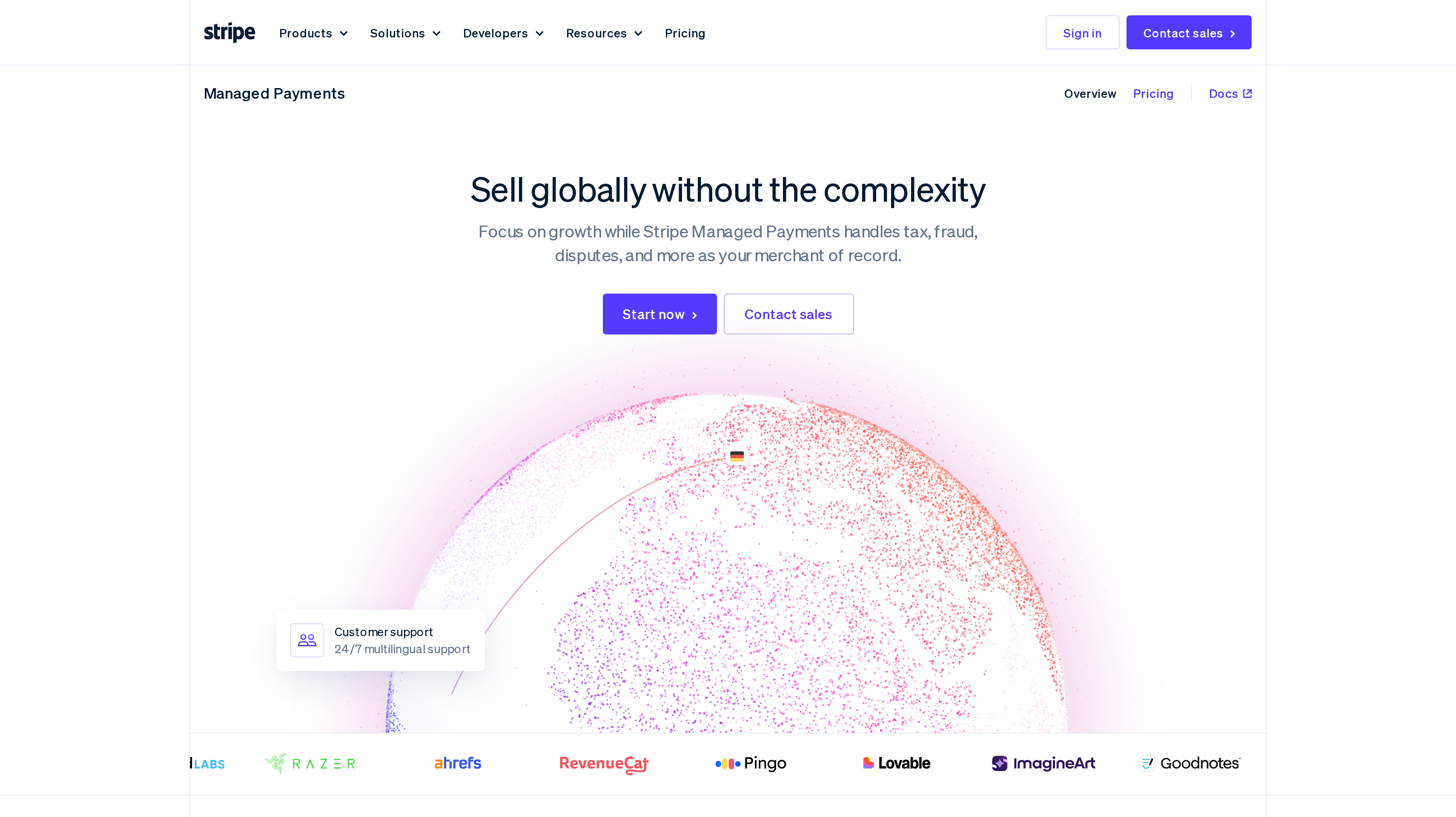
Stripe Managed Payments is a separate MoR product. It adds 3.5% to Stripe payment processing fees, with Billing charged separately for subscriptions. Access depends on Stripe's eligibility review, your business location, product, and integration.
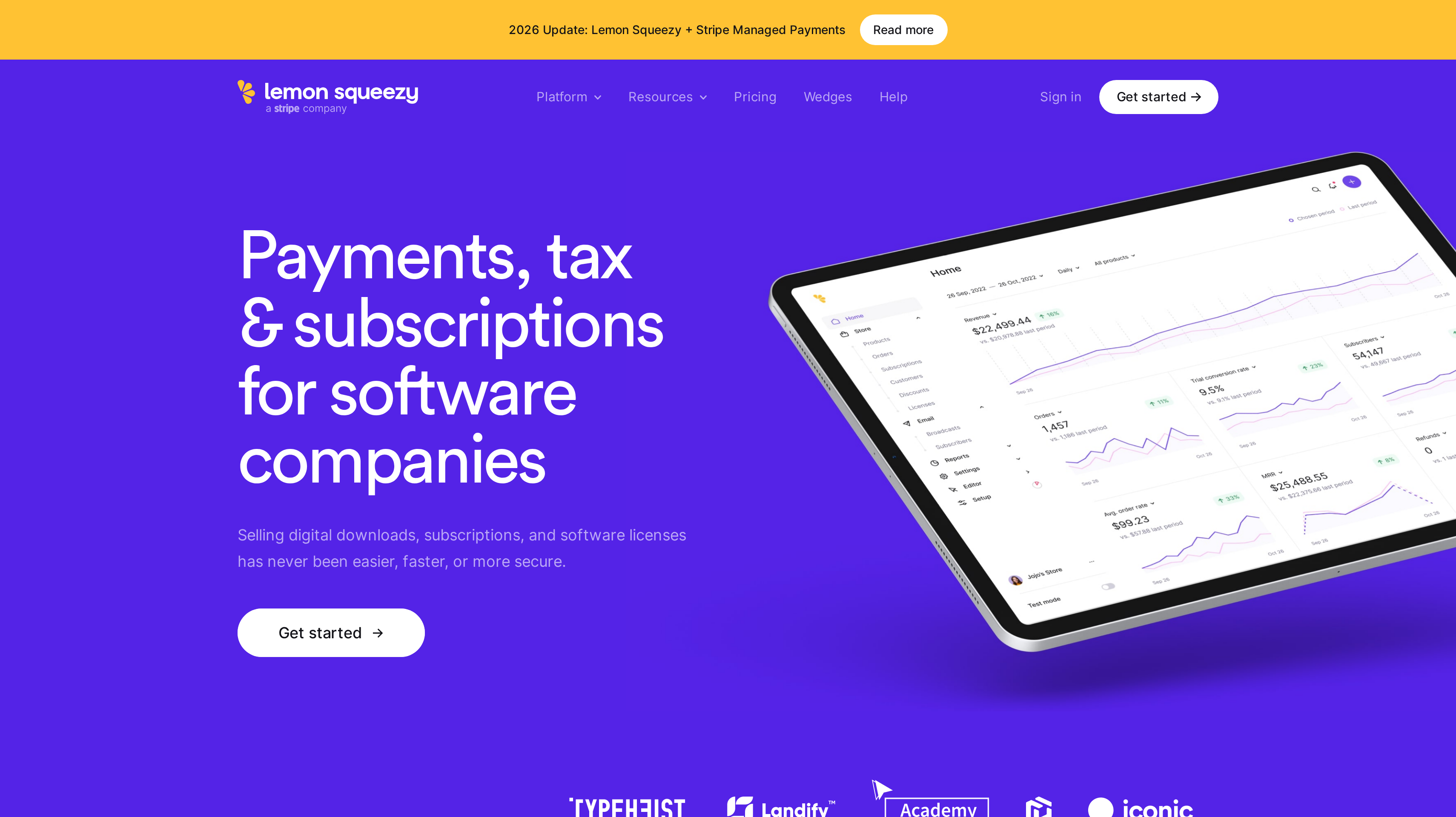
Lemon Squeezy has a transition to consider. Stripe acquired it in 2024. Its 2026 update describes the team's work on Stripe Managed Payments and a planned migration path. Compare the two products separately before starting a new integration.
Your partner channel should fit the billing choice. Affonso has native connections for Paddle, Polar, Creem, Dodo Payments, and Stripe. Its documentation also covers Stripe Managed Payments through that Stripe connection. Other providers can use your backend and the Affonso API.
What a merchant of record actually is
A merchant of record, or MoR, is the legal seller for the transactions it handles. The provider sells your software to the customer, collects the payment, and handles the relevant sales tax collection and remittance within its coverage. Refunds, disputes, and transaction support also belong in the service comparison.
For a SaaS founder, that changes who owns the work around a subscription. Your application still needs to grant access, recognize a renewal, and remove access after cancellation. The MoR supplies the billing events your app uses. Your team remains responsible for the product and the support customers need to use it.
A payment processor alone leaves your business as the merchant of record. Standard Stripe Payments and Stripe Managed Payments therefore represent different buying decisions. The Stripe alternatives guide covers that broader set of payment setups.
Check seller eligibility before comparing country totals. A provider accepting customers in a market does not mean a founder based there can open an account or receive payouts. Ask whether your legal entity, product category, customer locations, and bank account fit the service. Then compare the billing model your app actually needs.
How we ranked these merchant of record providers
This shortlist focuses on a SaaS founder choosing a billing partner. The buying question is who should handle the sale, how your app will receive billing events, and what the service costs across your actual customer mix.
Public product pages, pricing, and vendor documentation provide the basis for the comparison. This is a research-based shortlist. The ranking favors billing flexibility alongside merchant of record responsibilities. Polar leads because it combines subscriptions, credits, and metered usage with tax handling, while Paddle is the alternative for founders prioritizing all-in-one subscription billing and buyer support. Fees, existing infrastructure, and sales workflows distinguish the remaining picks.
We compared five criteria:
Responsibility for the sale. Tax handling, fraud, disputes, and transaction support. Identify which obligations the provider takes on and where its coverage ends.
Billing model. Subscriptions, seats, metered usage, credits, and one-time purchases. An AI product selling credit packs needs a different evaluation from an app selling a fixed annual subscription.
Developer workflow. Checkout, APIs, SDKs, webhooks, and the way billing connects to product access. Follow a purchase, renewal, refund, and cancellation through the systems your team will operate.
Eligibility and operations. Supported seller locations, product acceptance, customer markets, and settlement terms. Those determine whether a service can work for your company before its feature list matters.
Total cost. The base transaction fee, monthly plans, subscription charges, international payments, refunds, and payouts. Compare an expected mix of sales rather than one headline percentage.
Affonso connects natively with four of the first picks, plus Stripe. That makes partner tracking relevant to the comparison, but the ranking follows the billing use case. FastSpring and Cleverbridge earn places for their software sales workflows. We plan to review this guide quarterly and after material product or pricing changes.
The best merchant of record in 2026
These eight merchant of record companies cover different ways to sell software. Start with the billing model and the work you want the provider to own. A general SaaS recommendation, a credit-based AI app, and a negotiated enterprise sale can lead to different choices.
1. Polar, best for SaaS subscriptions and usage billing
Polar is our first pick for SaaS founders who want subscription billing that can also charge for usage. It combines recurring plans, prepaid credits, and metered events with a merchant of record service that handles payments, sales tax, fraud, refunds, and chargebacks. A team can evaluate a fixed subscription and consumption-based pricing within the same platform.
Starter has no monthly subscription charge and a 5% + $0.50 transaction fee. Pro costs $20 per month with 3.8% + $0.40 per transaction. Growth costs $100 per month with 3.6% + $0.35, and Scale costs $400 per month with 3.4% + $0.30. Polar lists an additional 1.5% for non-US cards and no subscription surcharge.
Build the evaluation around your unit of usage. Define what counts as a billable event, how credits apply, and when the customer sees an overage. Polar separately labels its new usage billing engine as early access, so distinguish the available workflow from that newer engine when planning implementation.
The Polar integration gives Affonso a native connection to the payment provider. Keep referral attribution beside the paid customer while your application handles the usage that produces the bill.
Best suited for SaaS and AI product teams that want subscriptions, credits, and usage to share a billing workflow. The paid plans also give growing teams a choice between monthly platform cost and the transaction rate.
2. Paddle, best for all-in-one SaaS billing and buyer support
Paddle brings checkout, recurring billing, payments, and tax compliance into one service built for software businesses. Fraud protection, chargeback handling, and buyer billing support also sit in that setup. It is a strong alternative for a SaaS founder who wants to evaluate the subscription and the work around the sale together.
Pay as you go costs 5% + $0.50 per checkout transaction, with no monthly fee. Paddle also offers custom pricing for high-volume businesses and more complex requirements. Its pricing page separates additional services such as invoicing from the standard checkout offer, so scope a sales-assisted workflow separately.
The useful evaluation follows a customer's full subscription. Create the plan you intend to sell, make a purchase, change the subscription, and inspect the billing events your app receives. Include a payment question in that exercise so support knows which requests belong with Paddle.
The Paddle integration connects that billing setup to Affonso for affiliate and partner tracking. If another requirement narrows your shortlist, the Paddle alternatives guide covers the switching decision in more detail.
Best suited for SaaS founders who want one provider to run subscription payments, tax compliance, and buyer billing support. Its combined recurring billing and support service fits teams that want those responsibilities with one provider.
3. Creem, best for a lower base fee with software billing tools
Creem combines merchant of record checkout with subscriptions, credit wallets, and usage-based billing. Its API, SDKs, CLI, and webhooks give developers several ways to connect the store to their app. The published base rate makes it an early comparison for a founder watching transaction costs while building a software business.
Pricing is 3.9% + $0.40 per successful transaction, with no monthly or setup fee on the standard offer. Creem lists tax handling, invoicing, fraud protection, and chargeback handling alongside its billing tools. Higher-volume businesses can request custom pricing.
Credit wallets and custom meters matter when a product sells a balance that customers spend over time. Define whether a purchase adds credits, starts a recurring plan, or does both. Then check how your backend learns about that purchase and updates access. A low transaction rate is useful only if the billing model fits the product you sell.
Creem also has its own affiliate and revenue-split tools. Founders choosing Affonso for their affiliate and partner programs can use the native Creem integration alongside that payment setup.
Best suited for software founders who want a lower published base fee with subscriptions, credits, and developer interfaces in the same platform. It is a useful starting point for a product team pricing its first paid plans or credit packs.
4. Dodo Payments, best for credit-based and hybrid AI products
Dodo Payments supports one-time purchases, subscriptions, usage-based, credit-based, and seat-based billing. Its credit system includes rollover, overage, and expiration controls. That gives AI teams specific billing behavior to evaluate when customers buy credits and consume them across a subscription period.
The standard domestic US card and wallet rate is 4% + $0.40 per transaction. Subscriptions, add-ons, and usage-based billing carry an additional 0.5%, and international payments add 1.5%. The pricing page lists other payment-method charges separately. ACH and SEPA Direct Debit use a different fee schedule, so the card rate is not a universal total.
Dodo's documentation separates countries eligible for payment acceptance from countries eligible for merchant acceptance. Check your identity and product eligibility first. Then exercise the checkout method you intend to ship, whether that is a payment link, overlay, inline checkout, or an API-led flow.
Use the native Dodo Payments integration when Affonso runs your affiliate and partner programs. For a credit product, decide how a new purchase and later recurring charges should appear in the partner workflow before launch.
Best suited for AI and SaaS teams combining credits, recurring access, or seats in one product. The credit controls are especially relevant when unused balances, overages, and expiration form part of what the customer buys.
5. Stripe Managed Payments, best for eligible teams already using Stripe Checkout
Stripe Managed Payments adds a merchant of record service to a Stripe setup. It handles indirect tax within supported coverage, fraud, disputes, and transaction-level customer support. Checkout and Payment Links are supported, and subscriptions use Stripe Billing. That makes it worth evaluating before moving a compatible Stripe integration to another billing provider.
Managed Payments adds 3.5% per successful transaction to the standard Stripe payment processing fees. Stripe Billing fees apply separately for subscriptions. The MoR fee is therefore an additional service charge, not an all-in processing rate.
Stripe determines access through an eligibility review that considers business type and geography. Your business location, digital product, and payment flow must qualify. The documentation excludes Connect platforms and certain advanced payment integrations, so having a Stripe account alone does not establish compatibility.
Affonso's Stripe Managed Payments guide explicitly documents support through the existing Stripe connection. Checkout metadata and Payment Links follow that path. The commission base FAQ explains that commission uses the pre-tax purchase price after discounts.
Best suited for eligible SaaS teams already using Stripe Checkout or Payment Links that want MoR coverage within that setup. Evaluate the supported flow and full fee stack against the work involved in adopting another provider.
6. FastSpring, best for software subscriptions alongside sales-assisted deals
FastSpring combines merchant of record payments with subscriptions, localized checkout, digital invoicing, and interactive quotes. That mix earns its place for software businesses selling through both a self-service checkout and a sales conversation. A founder can evaluate the recurring product and the negotiated order in the same commerce platform.
Pricing is custom. FastSpring describes a flat-rate, revenue-sharing model based on transaction type and volume, with access to its platform tools. Its quote form asks about gross transaction volume, transaction count, and the geographic split of revenue. Use those inputs to prepare a comparison that reflects your business.
Interactive Quotes includes e-signatures, payments, CRM integrations, and information about how prospects engage with a quote. Those capabilities matter when a customer needs an agreed offer before paying. Digital invoicing adds another purchase path for B2B orders.
Bring a representative sales-assisted deal to the evaluation. Show the agreed subscription term, the invoice the buyer expects, and the point when your app should grant access. Ask for the resulting commercial terms in the quote rather than estimating a transaction rate.
Best suited for software teams that want self-service subscriptions and sales-assisted orders within one commerce setup. Quotes and invoicing give sales and finance concrete workflows to compare alongside the developer integration.
7. Lemon Squeezy, best for software licenses and digital downloads
Lemon Squeezy combines subscriptions, software license keys, digital downloads, and hosted checkout. Its license management tools can issue, deactivate, and reissue keys. That remains a specific buying reason for a founder whose software sale includes a license or downloadable product alongside recurring access.
The base platform fee is 5% + $0.50. Its fee documentation adds 0.5% for subscription payments, 1.5% for international transactions outside the US, and 1.5% for PayPal transactions. Payout fees vary by method and region, so put the settlement path beside the checkout fee when estimating cost.
Stripe acquired Lemon Squeezy in 2024. The official January 2026 update says the team is building Stripe Managed Payments and wants to provide Lemon Squeezy users with a migration path. This does not establish a completed migration or a shutdown date.
For a new integration, confirm the onboarding route and how the license or download workflow fits the product direction. The Lemon Squeezy alternatives guide covers a switch if you already use it and want to compare other setups.
Best suited for founders selling software licenses, digital downloads, and subscriptions together. License management and product delivery give those teams a specific workflow to evaluate alongside billing.
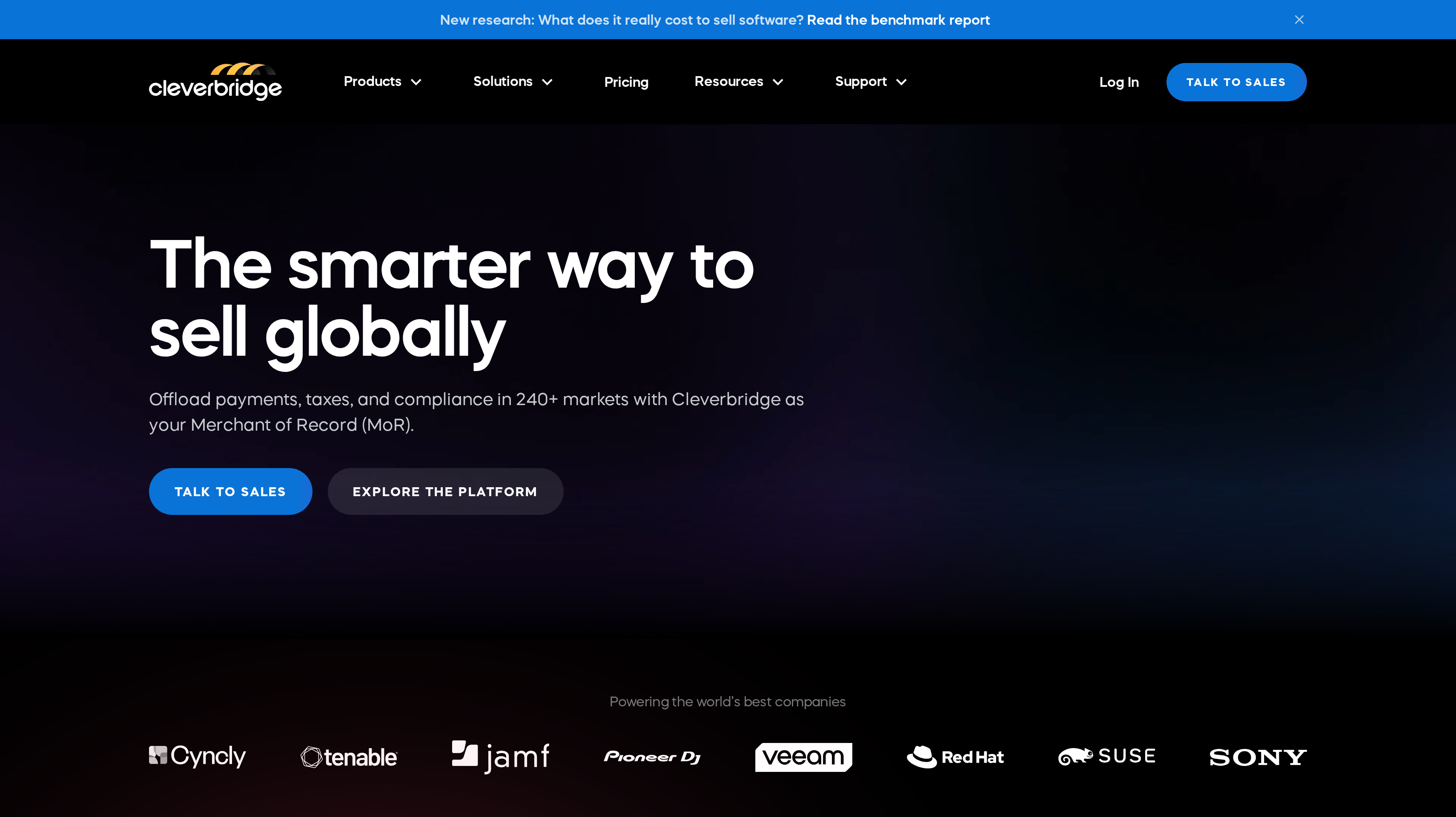
8. Cleverbridge, best for established software commerce operations
Cleverbridge brings global payments, subscriptions, checkout, tax compliance, and fraud prevention into its merchant of record platform. Quoting and invoicing support B2B selling, while its integration options include APIs and webhooks. It belongs on the shortlist when several teams need to connect software commerce to their existing business systems.
Pricing is custom and transaction-based. Cleverbridge says the quote depends on transaction volume, payment mix, currencies, and customer locations. Request terms around your real sales mix and the services you expect the provider to run.
Subscription management covers recurring customer relationships, while quoting and invoicing address the sales process before payment. Map those workflows to the people who own them. Engineering needs billing events, finance needs transaction records, and sales needs a way to turn an agreed offer into an order.
Use that map to scope the integration and service requirements before comparing quotes. A provider handling a checkout and a provider helping run a broader commerce operation may be pricing different work. Ask for enough detail to compare the same responsibilities across proposals.
Best suited for established software businesses coordinating payments, subscription operations, and B2B sales across teams. Its commerce and integration tools fit a buying process that includes finance, sales, and engineering.
Side-by-Side Comparison
The comparison covers the billing use case, published base pricing, and how Affonso connects. Dollar amounts are USD. Base transaction rates are starting points. The fee notes identify charges that materially change a SaaS comparison, while custom-priced services need a quote for your own sales mix.
Tool
Published base price
Fee or eligibility detail
Best for
Affonso connection
Polar
Starter 5% + $0.50; Pro $20/mo + 3.8% + $0.40
Non-US cards +1.5%
SaaS and usage billing
Native
Paddle
5% + $0.50/checkout
Custom terms for other requirements
All-in-one billing and support
Native
Creem
3.9% + $0.40
No monthly fee on standard offer
Lower base fee
Native
Dodo Payments
US cards/wallets 4% + $0.40
Billing +0.5%; international +1.5%
Credits and hybrid billing
Native
Stripe Managed Payments
3.5% plus Payments fees
Billing separate; eligibility review
Existing Stripe Checkout
Existing Stripe connection
FastSpring
Custom quote
Transaction type and volume determine terms
Sales-assisted software
Backend + API
Lemon Squeezy
5% + $0.50
Subscriptions +0.5%; international and PayPal extras
Licenses and downloads
Backend + API
Cleverbridge
Custom quote
Sales mix determines terms
Software commerce operations
Backend + API
Which merchant of record should you pick
Choose around the sale your app needs to support. A fixed subscription, a credit balance, and an invoice agreed by sales involve different events and different people. Pick two providers and walk the same purchase through both before committing engineering time.
The table maps those buying situations to the capabilities that matter most.
Use case
What changes about the setup
What to look for
A SaaS product needs subscriptions and usage pricing
Fixed plans, credit balances, and metered events need one billing workflow.
Polar's subscriptions, credits, and meters; distinguish its new early-access engine.
A founder wants all-in-one subscription billing and support
Billing and tax work need a clear owner.
Paddle's checkout, subscriptions, compliance, and buyer billing support.
Transaction cost drives an early decision
A lower base rate needs to fit the required billing model.
Creem's published rate, credit wallets, and developer interfaces.
A product sells credits with recurring access
Unused balances, overages, and expiration affect the offer.
Dodo Payments' credit controls and hybrid billing.
An existing Stripe app wants MoR coverage
Eligibility and the current checkout flow decide compatibility.
Stripe Managed Payments with Checkout or Payment Links and separate Billing costs.
Sales negotiates software orders
An agreed quote needs to become an invoice and paid access.
FastSpring's interactive quotes or Cleverbridge's quoting and invoicing.
The purchase includes software delivery
Keys or downloads need to follow payment.
Lemon Squeezy's license and download tools, alongside its stated product direction.
Proof: What results look like
A useful billing evaluation leaves records your team can reconcile. Follow a representative subscription through checkout, renewal, a plan change, and a refund. Compare the customer receipt with the billing event your app receives and the transaction record finance uses. For a credit product, include exhausted credits and an overage in the same exercise.
The provider documentation gives you concrete behavior to inspect. Stripe describes customer purchases as sold through Link and separates transaction support from your product support. Polar describes a transaction ledger with fees beside each entry. Dodo documents credit rollover, expiration, and overage controls. Those are things a buyer can check against their own workflow. They do not establish a conversion lift or guarantee that a particular product earns more revenue.
Partner tracking has its own proof. After a referred customer purchases, check that the referral and commission match the billing event. Affonso's commission base FAQ documents a pre-tax purchase price after discounts, including when Stripe Managed Payments collects the tax. Keep that amount separate from the MoR's fee and settlement balance when reviewing the sale.
FAQ
What is the best merchant of record for SaaS in 2026?
Polar ranks first for combining SaaS subscriptions, prepaid credits, and metered usage with a merchant of record service. Paddle is a strong alternative for all-in-one subscription billing and buyer support, while Creem offers a lower published base transaction rate. Choose Stripe Managed Payments when your existing Stripe flow and business qualify and keeping that setup matters most.
Is Stripe a merchant of record?
Standard Stripe Payments leaves your business as the merchant of record. Stripe Managed Payments is the separate MoR service. It supports eligible digital products through supported flows such as Checkout and Payment Links, subject to an eligibility review. Compare that product with the other MoR providers here.
How much do merchant of record providers charge?
Paddle publishes 5% + $0.50 per checkout transaction, Creem lists 3.9% + $0.40, and Dodo's domestic US card and wallet rate starts at 4% + $0.40. Stripe Managed Payments adds 3.5% to payment processing fees. Include subscription charges, international sales, payment methods, and settlement terms in the comparison.
What is happening with Lemon Squeezy and Stripe Managed Payments?
Stripe acquired Lemon Squeezy in 2024. Lemon Squeezy's January 2026 update describes its team's work on Stripe Managed Payments and a planned migration path. Confirm the current onboarding and migration options for your account. The announcement does not establish a shutdown deadline.
Which merchant of record is best for an AI product?
Polar fits products combining subscriptions, prepaid credits, and metered usage. Dodo Payments is worth comparing when rollover, overages, and credit expiration affect the offer. Creem also provides credit wallets and usage billing. Model the event that consumes a credit and the purchase that replenishes it before choosing.
Can I use a merchant of record for B2B SaaS?
Yes, but identify how the customer buys. A self-service subscription and a sales-assisted invoice require different workflows. FastSpring includes digital invoicing and interactive quotes, while Cleverbridge offers quoting and invoicing within its commerce platform. Compare the buyer's purchasing requirements with the provider's supported process.
Does customer country coverage mean I can open a seller account there?
No. Customer payment acceptance and seller eligibility answer different questions. Check your business location, product category, verification requirements, and payout account. Stripe Managed Payments, for example, publishes specific eligibility requirements beyond having a standard Stripe account.
Which merchants of record work with Affonso?
Affonso has native integrations for Paddle, Polar, Creem, Dodo Payments, and Stripe. Its help documentation explicitly covers Stripe Managed Payments through the existing Stripe path. Lemon Squeezy, FastSpring, and Cleverbridge do not have native Affonso integrations. Your backend can track their sales and refunds through the Affonso API integration.
Try for free
Start with Polar for subscriptions, credits, and usage billing in one merchant of record setup. Compare Paddle when all-in-one subscription billing and buyer support lead the decision, or Creem and Dodo Payments around cost and credit controls. Give an existing Stripe Checkout integration its own eligibility check before moving it. Once you choose who handles the sale, connect the customer and creator recommendations that bring people to checkout. Affonso runs affiliate and partner programs with referral tracking, commissions, and payouts in one place. Start your Affonso free trial and evaluate the partner workflow alongside your billing setup.
 Affonso
 Silvestro Zinnanti, FounderComparisonOctober 23, 202620 min read