Best rank tracking tools in 2026: the buyer's shortlist.
Compare eight rank tracking tools for SaaS, app, and plugin teams. See pricing, update frequency, SERP features, reporting, and the fit for your team.
You publish a comparison page, improve an integration page, and update your product positioning. A month later, you still cannot tell which pages gained ground on Google or which competitor moved ahead.
A rank tracker gives that work a history. You choose the keywords, markets, and devices that matter, then follow the same searches over time.
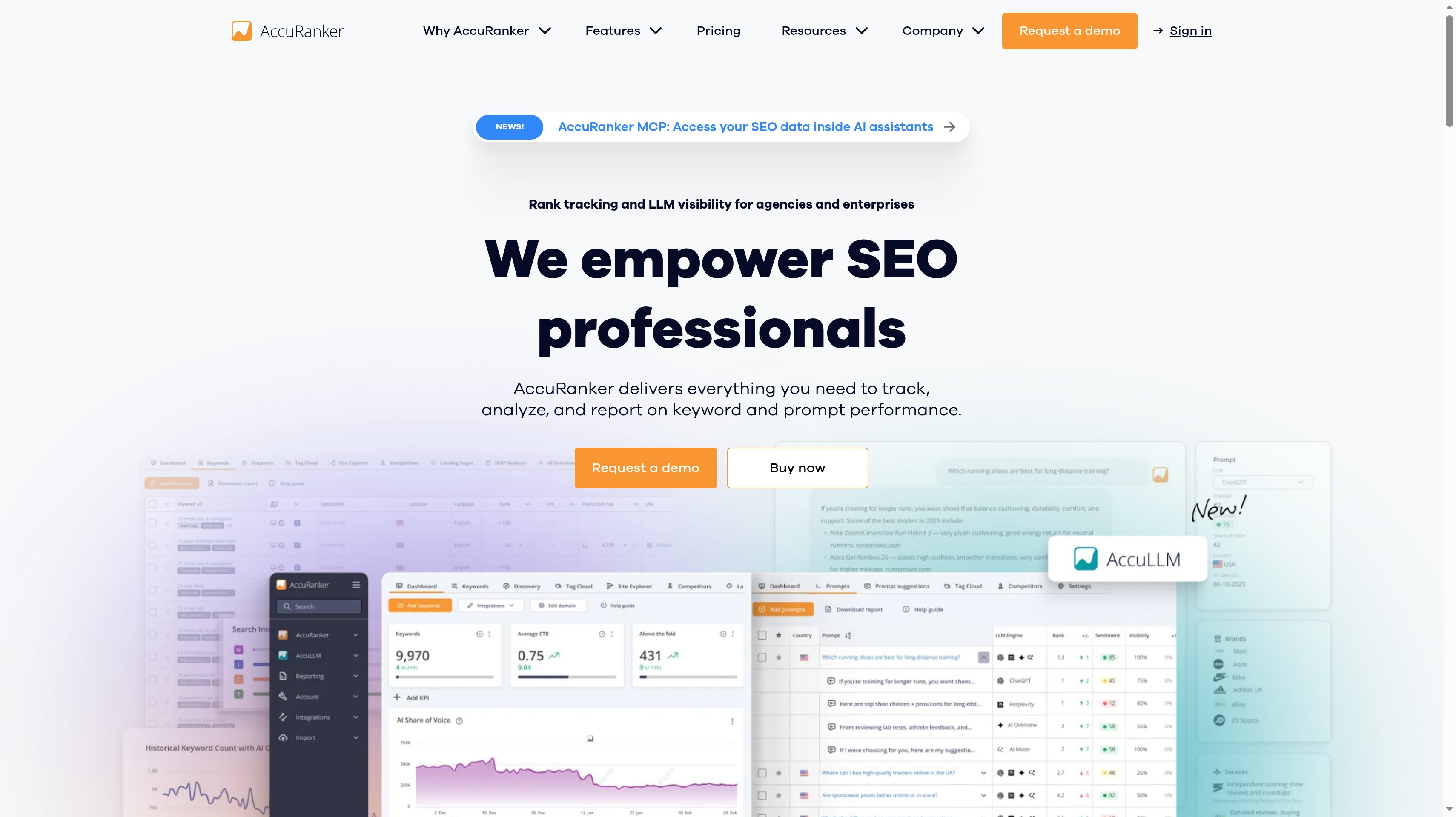
This shortlist covers the best rank tracking tools for SaaS, app, and plugin teams in 2026. AccuRanker leads for fast, daily tracking at scale, with tagging and reporting for large keyword lists.
Key Takeaways
The short version, before you compare the tools.
AccuRanker leads for dedicated tracking at scale. Its Professional plan covers 2,000 keywords from $224 per month on monthly billing. Daily updates, search intent, tagging, and filtering help your team separate movement on product pages from movement across the rest of the site.
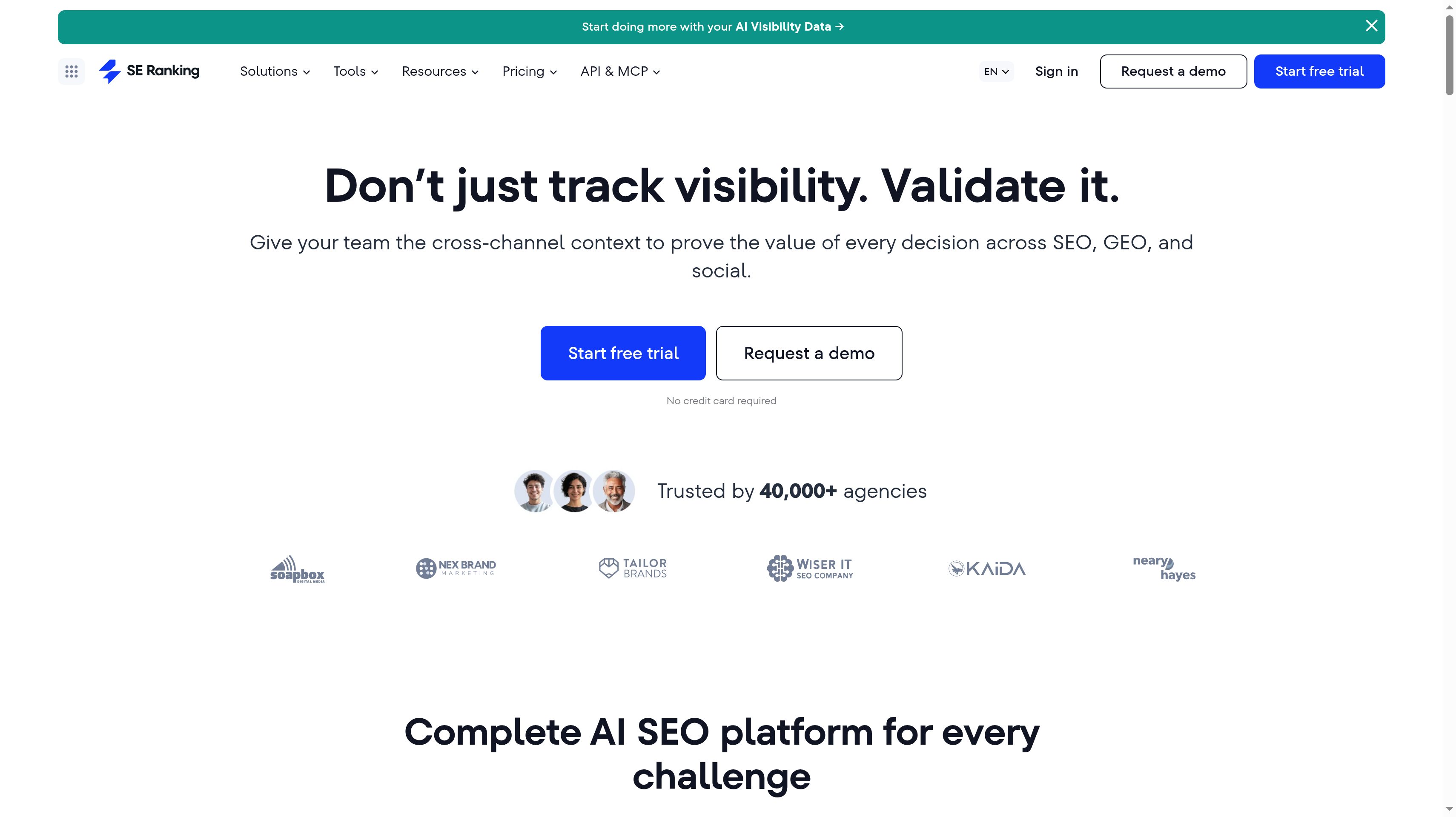
SE Ranking combines tracking with a broader SEO toolkit. Core is $103.20 per month billed annually or $129 monthly, with 2,000 keywords tracked daily. Research and audits share the subscription, so the person investigating a ranking drop can also work on its possible causes.
Team access changes the buying decision. Nightwatch includes unlimited seats on every plan, and Advanced Web Ranking includes unlimited users and projects. That matters when writers, SEO specialists, and agency clients need to work from the same data.
Daily tracking is a plan-level choice. Mangools Basic includes weekly updates for 200 keywords, while Agency includes daily updates for 1,500. Keyword.com offers weekly or daily packages, and SERPROBOT sells a daily update allowance per bot.
Reporting deserves its own comparison. Keyword.com combines rank data via API with Looker Studio and optional white-label reports. AccuRanker puts its unlimited read API on Expert and BigQuery on Enterprise; Advanced Web Ranking offers Looker Studio on Agency and BigQuery on Enterprise.
Small tracking budgets have options. Wincher suits teams that want simple daily positions and competitor tracking. SERPROBOT starts at $4.99 per bot per month, with 75 keyword updates per 24 hours, for founders buying capacity in small steps.
What rank tracking tools actually are (and what they are not)
Rank tracking tools record where a website appears for a chosen search query. You define the search engine and relevant settings, such as location and device, and the tool repeats that check on a schedule. A SERP tracker turns those individual checks into a history you can compare with competitors and with your own content changes.
For a SaaS company, the useful list goes beyond your brand name. Product-category queries show whether buyers can discover you. Comparison and alternatives queries show where people evaluate options. Integration pages can attract users looking for a specific connection. Group those searches by the page or buying question they support, so a report tells your team which work needs attention.
A position also needs context. Mobile and desktop results can differ, and local results depend on the place you select. SERP features can change what a buyer sees before reaching the organic listings. Keep the setup consistent when comparing dates, and use the relevant market rather than treating a single search as your worldwide position.
Rankings do not replace traffic, conversion, or revenue measurement. AI visibility trackers, content optimization tools, and backlink tools are separate categories. Judge the business outcome with your acquisition data. The free LTV:CAC analyzer helps you compare acquisition spending with customer value, so position gains stay connected to the economics of growing your product.
How We Ranked These Rank Tracking Tools
This shortlist evaluates rank tracking software for existing SaaS, app, and plugin companies, with Google as the main buying priority. The job is following your own pages and competitors across the keywords that support product discovery and evaluation.
The comparison draws on public product descriptions, pricing, and vendor documentation. The order reflects fit for that job; it is not an accuracy benchmark.
We compared five criteria:
Update frequency and tracking capacity. Daily and on-demand checks, the number of keywords included, and whether the plan counts stored keywords or individual updates. A list that fits a weekly allowance may need different capacity when you refresh it daily.
Search coverage. Supported search engines, countries, local results, and devices. Your target markets and mobile audience should determine the setup you evaluate.
Analysis and organization. Tagging, grouping, competitor comparisons, share of voice, and SERP-feature context. The goal is finding the page group that needs work without reading every keyword row.
Reporting and data access. Exports, client reports, Looker Studio, API access, and warehouse connections. We distinguish the capabilities of the product from those included in its entry plan.
Team fit and cost. Seats, websites, projects, trial access, and the paid plan needed for your workflow. Dedicated trackers and broader SEO bundles serve different working habits.
Customer statements remain attributed to their publisher. Adoption figures and quotes describe the vendor's reach and its customers' experiences. We plan to review this guide quarterly and after material pricing changes.
The Best Rank Tracking Tools in 2026
The right setup starts with your keyword list and the people using the reports. These eight tools cover dedicated daily tracking, wider SEO platforms, reporting infrastructure, and small tracking budgets. Read the plan details alongside the fit, because a keyword allowance, an update allowance, and a team seat solve different parts of the job.
1. AccuRanker, best for fast daily tracking at scale
AccuRanker is a dedicated tracking platform for teams managing large keyword lists. Daily updates, keyword research, search intent, tagging, and advanced filtering give you a way to organize those lists around your site. It leads this shortlist because dedicated tracking and analysis stay central as your keyword coverage grows. For a SaaS content team, that means keeping product, comparison, and integration searches distinguishable instead of reporting one sitewide average.
Professional starts at $224 per month on monthly billing for 2,000 keywords. It includes Google Search Console and Google Analytics integrations, reporting, and export. Expert starts at $764 per month on monthly billing for 10,000 keywords and adds dynamic tagging, Tag Cloud, Google Data Studio, and an unlimited read API. Those differences matter if your reporting process needs automated data access rather than a recurring export.
Enterprise has custom pricing for more than 25,000 keywords, with unlimited users and domains, BigQuery, raw SERP HTML, and a dedicated customer success manager. AccuRanker also offers MCP access and the separate AccuLLM visibility product.
Use the tags to reflect how your team assigns work. Writers handling alternatives pages and specialists handling integrations should be able to review their own searches. Shared tags give a planning meeting that structure.
Best suited for in-house SEO teams and agencies that need daily tracking across thousands of keywords. The tagging and higher-tier data connections fit a reporting process that already has clear page groups and owners.
2. SE Ranking, best for an SEO platform at a mid-market price
SE Ranking puts rank tracking alongside keyword, competitor, and backlink research, plus website and on-page audits. You can follow a comparison page's positions and investigate the broader SEO work in the same platform. That is a useful fit when the team buying the tracker also owns content planning and site improvements. Its place here comes from that combination of daily tracking and a wider working toolkit.
Core costs $103.20 per month billed annually or $129 monthly. It includes 10 projects, one manager seat, and 2,000 keywords tracked daily. Growth is $223.20 per month billed annually or $279 monthly, with 30 projects, three manager seats, and 5,000 keywords tracked daily. Growth also includes historical data and page changes monitoring, giving a team more context when reviewing movement after a site update.
Integrations include Data Studio, Matomo, Google Analytics, and Google Search Console. API credits and MCP access provide a developer path, with additional API capacity available as an add-on. The Agency Pack adds white-label capabilities for $69 per month on annual billing.
SE Ranking also includes prompt tracking and offers an AI Search add-on. Start with the daily keyword allowance and the projects your team will maintain. A free 14-day trial requires no credit card.
Best suited for SaaS marketing teams that want daily positions, research, and audits in one subscription. Core fits a single manager, while Growth gives a broader team more projects and keyword capacity.
3. Nightwatch, best for segmented tracking with unlimited seats
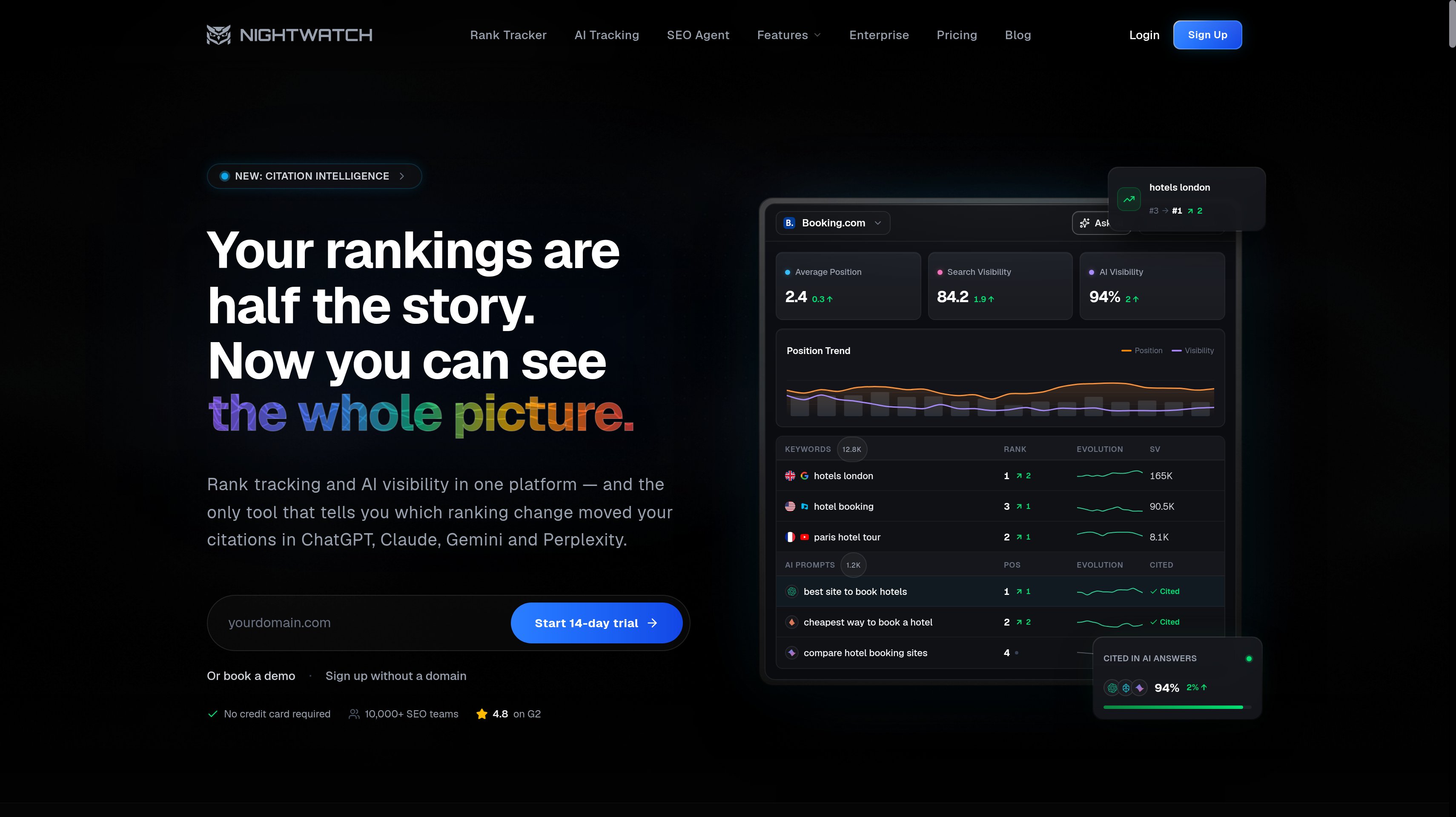
Nightwatch suits teams that need to review rankings by market and share the work widely. It offers daily tracking in any location or language across Google, YouTube, Bing, Yahoo, DuckDuckGo, and Google Maps. That coverage helps when your product serves several countries or when the searches around your app extend beyond Google's main results. Organize your evaluation around the language, location, and page group each person owns.
Every plan includes unlimited seats with no per-seat fees. Starter is €79 per month billed yearly at €948, with 500 keywords and five websites. Professional is €159 per month billed yearly at €1,908, with 2,500 keywords and 25 websites. Agency is €399 per month billed yearly at €4,788, with 7,500 keywords and 100 websites. Custom plans cover requirements above 20,000 keywords.
Keyword research, site audit, Content Studio, Google Analytics integration, an SEO MCP server, and real-time on-demand checks sit alongside tracking. Looker Studio, white-label reports, and API access are available on Professional. That tier is the natural comparison point when the same rankings need to reach a client report or an internal dashboard.
Nightwatch also includes AI visibility tracking. Its 14-day free trial requires no credit card, so colleagues can evaluate the daily tracking setup together.
Best suited for distributed content and SEO teams dividing search performance by language, market, or website. Unlimited seats let writers and specialists review the same ranking data without adding a seat fee for each collaborator.
4. Advanced Web Ranking, best for SERP depth and forecasting
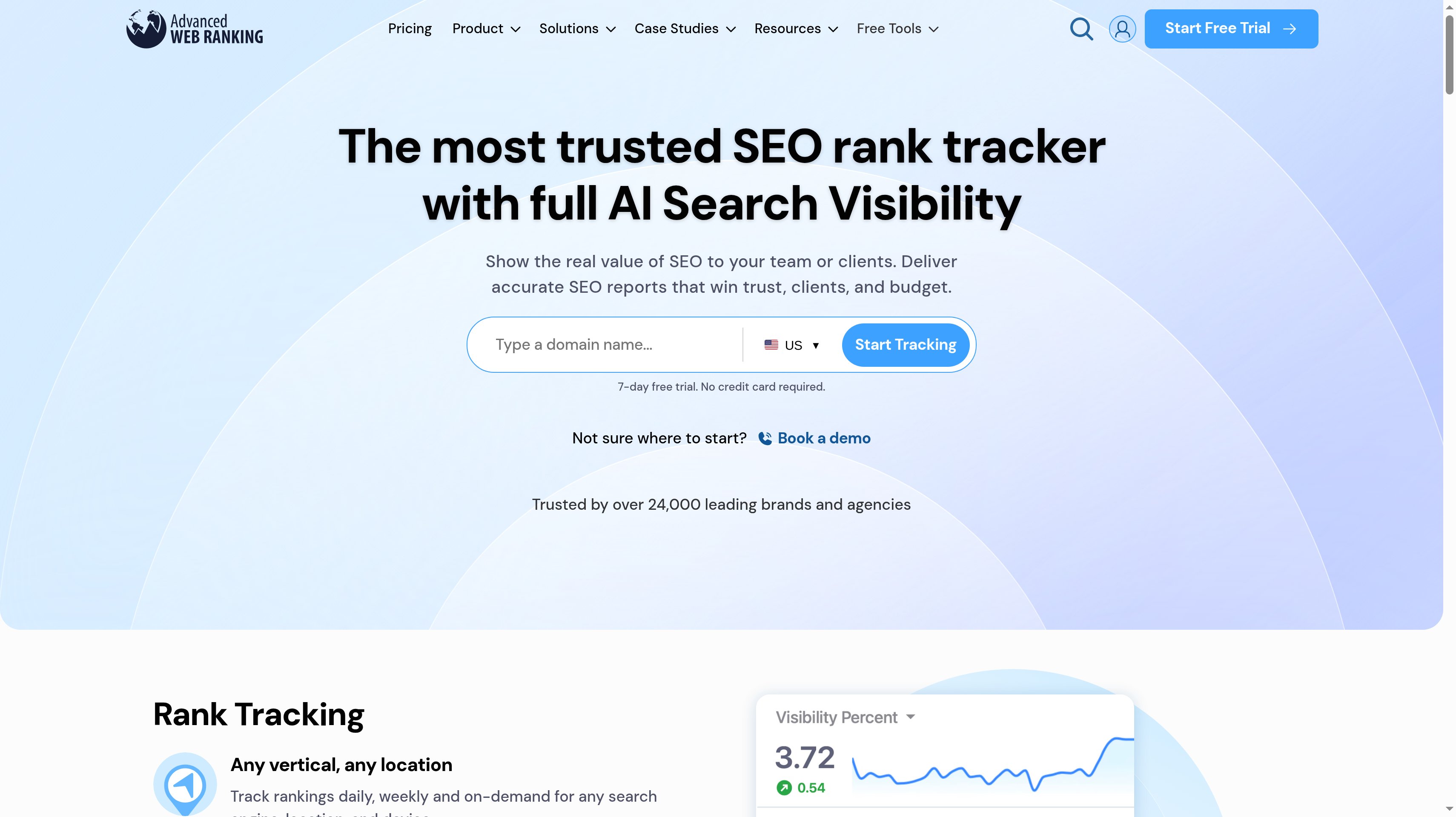
Advanced Web Ranking looks beyond an organic position number. It tracks organic results, SERP features, and sponsored results, with pixel position and above-the-fold analysis. Those views help explain why the same numbered position can occupy a different place on the screen. For a team defending competitive category queries, that context makes it easier to discuss the visibility your listing actually gets.
The platform supports more than 4,000 search engines, including Google, Bing, YouTube, Amazon, Naver, and Baidu. Local and maps tracking, desktop and mobile coverage, SEO forecasting, market share, and keyword cannibalization analysis broaden the reporting. Updates can run daily, weekly, bi-weekly, monthly, or on demand. It also offers AI visibility tracking.
Pro starts at $139 per month for 7,000 keywords, with unlimited projects and users. Agency starts at $279 per month for 14,500 keywords and adds Looker Studio and one-hour on-demand updates. Enterprise starts at $699 per month for 35,500 keywords and includes a BigQuery connector. Ent Plus 50k starts at $980 per month for 50,000 keywords and adds SSO.
A seven-day free trial requires no credit card, and all plans include a 30-day money-back guarantee. During an evaluation, choose a search with a crowded results page and compare the organic position with the pixel and above-the-fold views. That makes the added SERP detail concrete.
Best suited for SEO leads and agencies that need to explain search visibility, forecast opportunities, and share access across a team. Unlimited users and projects support work spread across markets and client accounts.
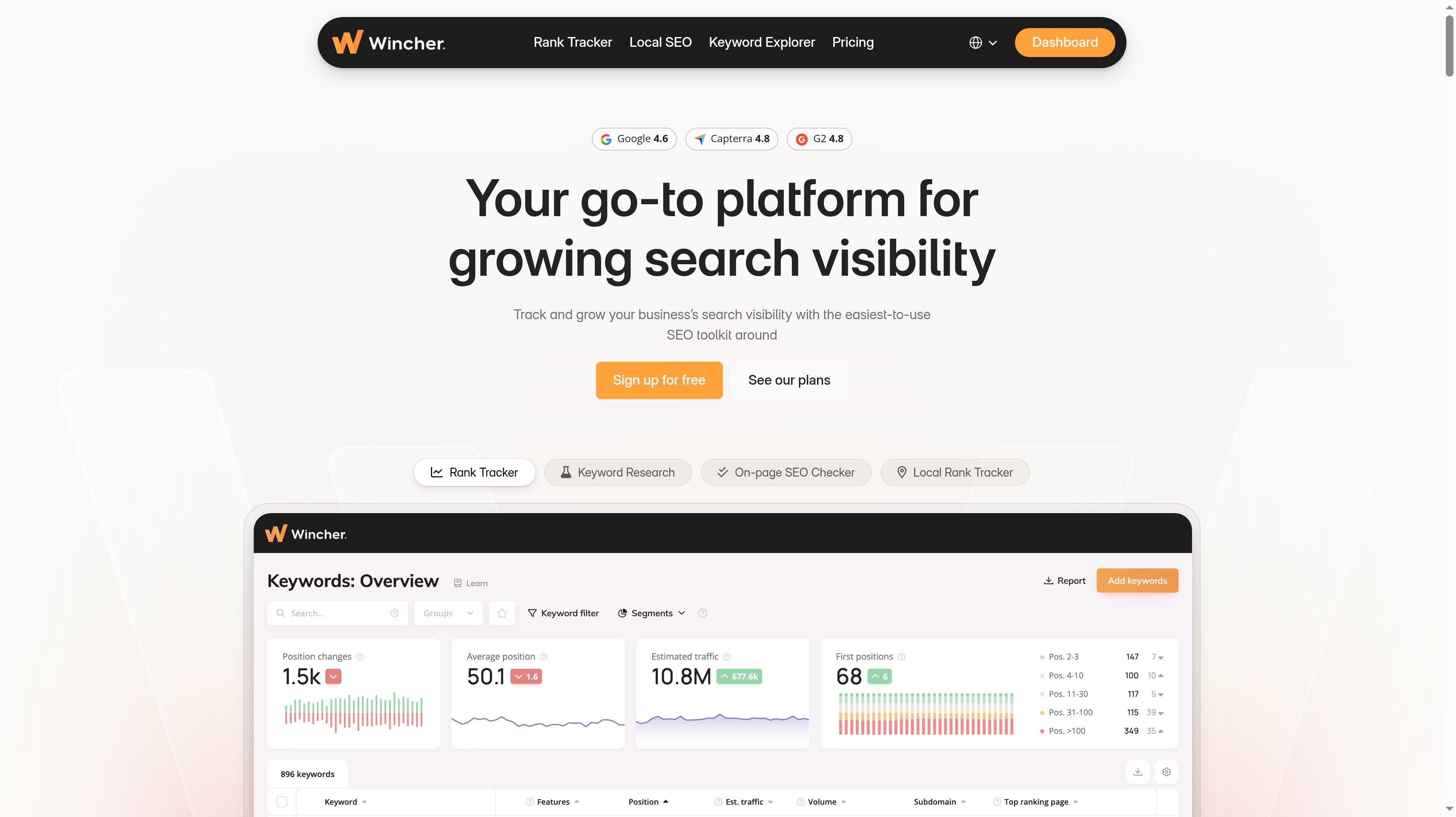
5. Wincher, best for simple daily tracking in a small team
Wincher keeps the buying decision close to the work of following your pages. Daily ranking updates, competitor tracking, SERP features, and keyword grouping cover the core monitoring routine. You can organize searches around the landing pages you own, then review whether those pages are gaining or losing ground. For a founder or a small content team, that is a practical starting point for a recurring SEO review.
Basic starts with 500 keywords, up to 10 websites, and one user, with a free trial. Standard starts with 1,000 keywords and includes unlimited websites and multiple users. Professional starts with 5,000 keywords. Choose the tier around the list you intend to maintain and the colleagues who need access, rather than the total number of queries your site might appear for.
The platform also has a keyword explorer, landing page insights, and Excel and CSV exports. Those exports fit a team that wants to discuss positions in its existing content-planning spreadsheet. On-demand ranking updates and share of voice are available from Standard, which gives a growing team another way to review a change and compare visibility.
Wincher's local rank tracker covers Google Maps. Treat that as a separate requirement when your product also serves local businesses or when a client needs maps visibility. For a SaaS site focused on category and integration searches, start the evaluation with the daily organic tracking and page groups you will actually use.
Best suited for small teams that want an approachable daily ranking routine with competitor context. Basic gives a solo owner defined website capacity, while Standard supports collaboration across an expanding site portfolio.
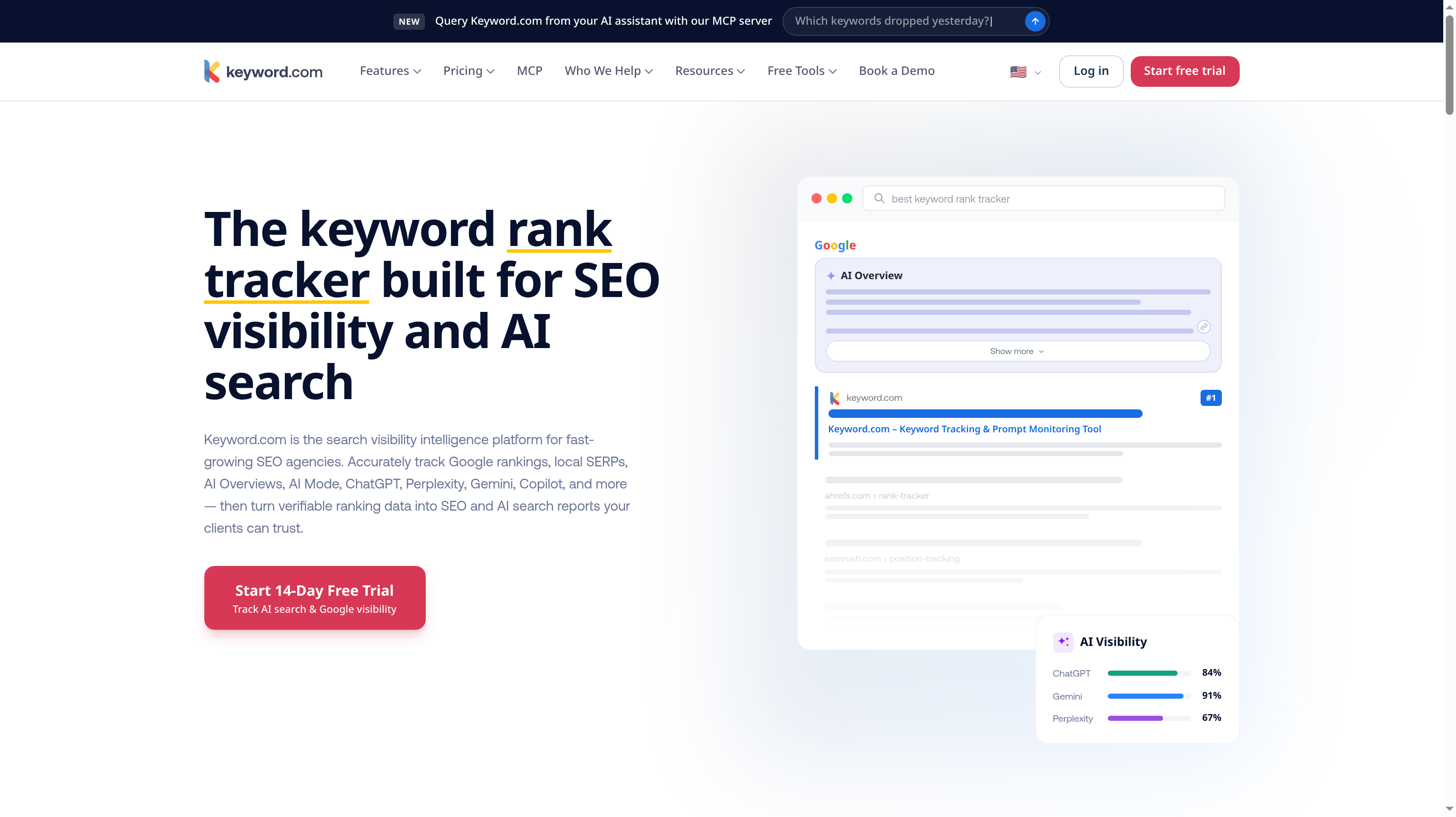
6. Keyword.com, best for white-label reporting and rank data via API
Keyword.com combines Google tracking with ways to deliver the data outside the tracker. Its rank tracker API, MCP server, Looker Studio connection, and unlimited domains suit teams building reports for clients or internal stakeholders. White-label client reports are available as an add-on. The appeal is having a ranking source that can feed the reporting process your team already uses.
Search Visibility starts at $3 per month billed annually at $36, or $4 monthly, with packages starting at 50 keywords. Weekly and daily update options are available. The white-label add-on costs $29 per month or $278 per year and adds a custom domain for shared views and reports, removes vendor branding, and supports password-protected shared reports. Compare that reporting setup with the keyword package your client work needs.
Local tracking offers city and ZIP-code precision, and share of voice gives a view of visibility across the keywords you follow. That combination fits reporting for a specific market as well as a national SaaS category. It also helps you define a report around the client's audience rather than around a generic location.
Keyword.com offers AI Overview and AI search visibility tracking alongside its Google products. The 14-day free trial requires no credit card and includes 100 keywords and 20 credits. Use it to evaluate how the ranking data reaches your dashboard and how clearly someone outside the SEO team can read the resulting report.
Best suited for agencies and technical marketing teams that want branded reports or ranking data in their own systems. The API and Looker Studio connection fit teams that treat reporting as part of a broader analytics workflow.
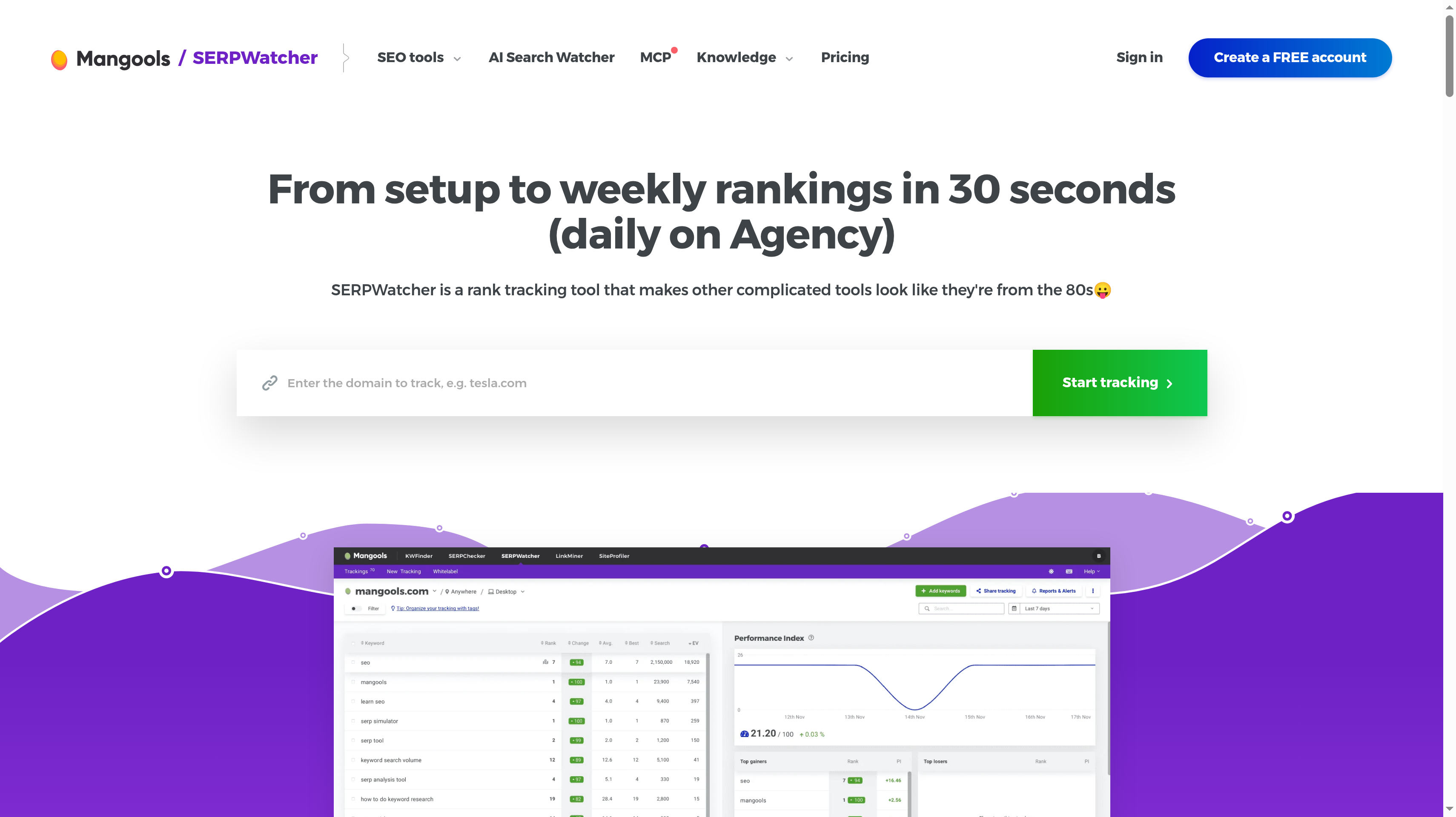
7. Mangools SERPWatcher, best for beginners buying an SEO bundle
SERPWatcher is the rank tracking part of Mangools. The bundle also includes KWFinder, SERPChecker, LinkMiner, and SiteProfiler, so you can research a keyword, inspect its results, and follow your page's position within the same product family. That is the reason to consider it here. A team learning how to choose and monitor search opportunities can keep those related tasks together.
Basic costs $452.40 per year on annual billing and includes 200 tracked keywords with weekly updates. Premium costs $632.40 per year and includes 700 tracked keywords. Agency costs $1,172.40 per year and includes 1,500 tracked keywords with daily updates. For your shortlist, make update frequency an explicit choice alongside capacity. A weekly review of an evergreen page and daily monitoring of an active comparison campaign are different routines.
API and MCP access are included in the bundle. Mangools also includes AI Search Watcher as a separate part of its toolkit. Keep your evaluation centered on SERPWatcher if the immediate need is classic keyword positions, then decide which of the other tools your team will use in its research process.
A free account is available, and paid subscriptions have a 48-hour money-back guarantee. Start with the pages you already maintain and the searches each page should answer. Then judge how the bundle supports your research and publishing routine.
Best suited for founders and junior content teams that want keyword research and rank tracking in one bundle. Basic fits a small weekly tracking list, while Agency supplies the daily cadence for a more active publishing program.
8. SERPROBOT, best for pay-as-you-go tracking on a tight budget
SERPROBOT offers an on-demand SERP checker and a paid rank tracker built around bots. Each SERP Bot costs $4.99 per month and supplies 75 keyword updates per 24 hours. You add bots as your update requirements grow, and every feature is available from the first bot. The small starting unit suits a founder who wants to establish a tracking habit before committing to a larger subscription.
The important planning unit is an update. Begin with the searches that matter most to your product pages, then decide how often each needs a fresh position. A saved keyword list and a daily refresh allowance are different things. Plan the updates you want the tracker to perform instead of assuming one bot refreshes every keyword you might eventually add.
The free SERP checker gives you an on-demand starting point. The paid product has a 14-day free trial with no payment required, and you can cancel at any time. There is no feature upgrade to unlock after the first bot, so the expansion decision centers on tracking capacity.
For a small SaaS or plugin site, keep the first list deliberate. Separate the category queries that bring discovery from the comparison searches that reflect an active buying decision. Review changes against your publishing work, and expand the allowance when you have a clear reason to follow more searches or refresh them more often.
Best suited for solo founders and budget-conscious operators who want to buy keyword updates in small increments. The bot model fits a focused list with an owner who knows which searches deserve regular checks.
Side-by-Side Comparison
Compare the entry plan with the workflow you need to run. Update frequency, team access, and reporting connections can make a higher tier the relevant starting point. Use the keyword and update allowances to size your actual tracking list.
Tool
Starting paid price
Free trial
Update frequency
Standout for SaaS teams
AccuRanker
Professional from $224/mo, monthly billing; 2,000 keywords
Demo available
Daily
Tagging and filtering; unlimited read API on Expert, BigQuery on Enterprise
SE Ranking
Core $103.20/mo billed annually or $129 monthly; 2,000 keywords
14 days, no card
Daily
Rank tracking, research, and audits; 10 projects on Core
Nightwatch
Starter €79/mo billed yearly at €948; 500 keywords
14 days, no card
Daily and on demand
Unlimited seats; Looker Studio, white label, and API on Professional
Advanced Web Ranking
Pro from $139/mo; 7,000 keywords
7 days, no card
Daily, weekly, bi-weekly, monthly, and on demand
SERP features, pixel position, forecasting; unlimited users and projects
Wincher
Basic, from 500 keywords
Free trial
Daily; on demand from Standard
Simple monitoring, competitor tracking, keyword groups, and exports
Keyword.com
Search Visibility from $3/mo billed annually at $36 or $4 monthly; from 50 keywords
14 days, no card
Weekly or daily package
API, Looker Studio, unlimited domains, and white-label add-on
Mangools SERPWatcher
Basic $452.40/yr, annual billing; 200 keywords
Free account
Weekly on Basic and Premium; daily on Agency
Tracking bundled with keyword research and SERP analysis
SERPROBOT
$4.99/mo per SERP Bot; 75 keyword updates per 24 hours
14 days, no payment
On demand; paid daily update allowance
Small capacity increments with all features from the first bot
Which rank tracking tool fits your use case
Start with the report your team needs to act on. A founder deciding which page to update needs a different setup from an agency sending client reports or a team joining ranking data to a warehouse.
Build your keyword list before choosing a plan. Include the relevant markets and devices, assign owners to page groups, and decide which searches need daily checks. Use that list to evaluate the tools below.
Use case
What changes about the setup
What to look for
Shortlist pick
Founder tracking 100-200 keywords on a budget
The list is small, but refreshing all of it daily still requires enough update capacity.
A clear refresh allowance, a manageable review routine, and room to add searches without buying a large platform.
SERPROBOT for small capacity increments; Mangools Basic for weekly tracking
Content team tracking comparison and alternatives pages daily
Writers need to distinguish movement by page group and see which competitor is gaining ground.
Daily checks, groups or tags, competitor context, and reports that match content ownership.
Wincher for a focused setup; SE Ranking for research and audits alongside it
Agency or in-house team needing white-label client reports
The same data must reach stakeholders under the team's branding.
White-label scope, report sharing, dashboard connections, and the tier or add-on that includes them.
Keyword.com with its white-label add-on; Nightwatch Professional
Team tracking thousands of keywords across countries and devices
The tracking list must represent several markets without hiding differences in an overall average.
Capacity for the intended setup, market-level analysis, local and mobile coverage where needed, and team access.
AccuRanker for large daily lists; Advanced Web Ranking for local and mobile SERP analysis
Team that wants rank data in Looker Studio, BigQuery, or via API
Rankings need to join an existing reporting system rather than stay in a separate dashboard.
The specific connector and plan, read access, and the data your reports require.
Keyword.com for API and Looker Studio; AccuRanker or Advanced Web Ranking Enterprise for BigQuery
Small team wanting tracking bundled with keyword research
Choosing the next query and monitoring the last published page belong to the same weekly routine.
Research and tracking in one subscription, plus an update cadence that matches the publishing schedule.
Mangools SERPWatcher; SE Ranking when audits are also part of the job
Proof: What results look like
AccuRanker publishes this statement from Esben Rasmussen, Senior SEO Manager at TRANSACT: "Its rapid keyword tracking capabilities allow us to deliver real-time insights to our clients, giving us the edge in a highly competitive market." His account describes the reporting benefit his team gets from speed.
Advanced Web Ranking says more than 24,000 brands and agencies trust it. SE Ranking says it is trusted by 40,000+ agencies. These are vendor-reported adoption figures, rather than evidence that buying either platform will improve your positions. Your evaluation should show whether the tool helps you spot a meaningful change and assign the next action to the right person.
Search visibility can also support a partner channel when publishers rank for the searches your buyers use. Jonathan Wilke, founder of supastarter, reports that affiliates refer more than 50% of its customers. That is a result from its affiliate channel using Affonso, separate from the ranking tools above. Read the customer testimonials, then use the growth simulator to explore what referred customers could contribute to your own business.
FAQ
What are the best rank tracking tools for SaaS?
AccuRanker ranks first here for dedicated daily tracking at scale, while SE Ranking fits teams that also want research and audits. Nightwatch suits shared work across markets with unlimited seats, and Advanced Web Ranking adds detailed SERP analysis and forecasting. The best rank tracking tools for your team are the ones whose cadence, coverage, and reports match the pages you maintain.
How often should rank trackers update?
Daily updates are useful for active product, comparison, and alternatives pages, especially when your team is making changes and watching competitors. Weekly tracking can suit a smaller evergreen list reviewed on a slower schedule. Use on-demand checks for a specific investigation, and look for a trend before rewriting a page because of one movement.
Why do rank trackers show different positions than my own Google search?
Your search can differ by location, device, language, and personalization, while a tracker repeats a defined setup at a particular time. Results can also change between the scheduled check and your manual search. Compare the same query and settings, then inspect the results page before treating the difference as an accuracy problem.
What is the difference between a rank tracker and Google Search Console?
Google Search Console reports how your site appeared in actual searches, including impressions, clicks, and average position. A tracker follows a chosen query list under defined settings and gives you a consistent way to compare your site with competitors. Use Search Console to understand search performance and the tracker to follow the markets and queries you deliberately selected.
What are good AccuRanker alternatives?
Advanced Web Ranking fits SERP analysis, forecasting, and unlimited users. Nightwatch offers unlimited seats and daily tracking across locations and languages, while SE Ranking combines tracking with a wider SEO platform. Compare the reports and keyword capacity you need to carry over.
Do rank tracking tools track AI Overviews or ChatGPT?
Several tools in this shortlist also offer AI Overview or AI search visibility tracking. Those capabilities sit alongside classic keyword positions and may use separate products, allowances, or add-ons. Compare them separately if you need to measure answers and brand mentions as well as Google's ranked results.
How many keywords should a SaaS company track?
Track enough to cover your main product categories, comparison and alternatives pages, integration pages, and relevant markets. Group searches by buyer intent and the page responsible for answering it, then remove duplicates that add no decision value. Expand when you publish into a new category or market, rather than filling an allowance for its own sake.
How do partners and affiliates fit into SEO?
Affiliates publish reviews and comparison pages that can rank for your category and introduce buyers to your product. Affonso tracks the referrals, commissions, and payouts those pages generate through affiliate and partner programs. Use saas affiliate software to run that channel alongside your own search work, with clear terms for the partners promoting you.
Try for free
Choose the tracker that fits your keyword list and reporting routine. Give your product, comparison, and integration pages clear owners. Use ranking movement to decide what to investigate, then measure the customers those pages bring. Publishers who already reach those buyers can become another source of growth. Affonso helps you run affiliate and partner programs with referral tracking, commissions, and payouts. Start your Affonso free trial and build a program those publishers can join.
 Affonso
 Silvestro Zinnanti, FounderComparisonNovember 5, 202623 min read